


The Nigerian Senate has directed the Clerk of the National Assembly, Kamoru Ogunlana, to transmit the Sixth Alteration Bill, 2026, seeking the establishment of state police, to President Bola Ahmed Tinubu for assent.
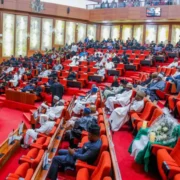
The resolution was reached during Wednesday’s plenary following the adoption of a motion sponsored by the Senate Leader, Senator Opeyemi Bamidele, representing Ekiti Central Senatorial District.
Bamidele explained that the National Assembly had completed the constitutional requirements for the proposed amendment under Section 9, Subsections 1 and 2 of the 1999 Constitution, as amended.
He said the Senate and the House of Representatives had overwhelmingly approved the bill on June 24 and July 23, respectively, securing more than the required two-thirds majority.
According to him, the bill was subsequently transmitted to the 36 State Houses of Assembly for consideration and approval, as constitutionally required.
He confirmed that all 36 state legislatures had returned their resolutions to the National Assembly, indicating that the constitutional threshold for the amendment had been satisfied.
Bamidele expressed appreciation to President Tinubu for supporting the proposed establishment of state police throughout the legislative process.
He also urged the President to forward the National Policing Bill to the National Assembly for consideration and speedy passage to provide the legal framework for the operation of subnational police formations.
Deputy Senate President, Senator Barau Jibrin, commended members of the relevant committees for their contributions to the constitutional review process.
He described the development as a major achievement for the Tinubu administration and the 10th National Assembly, noting that the establishment of state police would become an important part of their legislative legacy.
Barau also praised Tinubu for his commitment and determination towards the creation of state police in the country.
In his remarks, Senate President Godswill Akpabio disclosed that all 36 states had unanimously endorsed the constitutional amendment to establish state police.
He described the unanimous approval as a historic milestone, stressing that the next priority would be to establish an effective operational framework that would prevent conflicts between state and federal police authorities.
“So we have 36 over 36; this is unanimous, the 250 million Nigerians have spoken and the next thing we need to do is just the operationalisation and also to ensure that there is no conflict between the state police and the federal police,” Akpabio said.
He further described the legislation as a landmark achievement, noting that the 10th National Assembly had made a significant contribution to Nigeria’s policing and security architecture.
The proposed state police system is expected to decentralise policing responsibilities and give state governments a greater role in addressing security challenges within their jurisdictions.
However, the operationalisation of the system will require further legislative action, particularly the consideration and passage of the National Policing Bill, alongside the necessary institutional and regulatory arrangements.


















Comments