

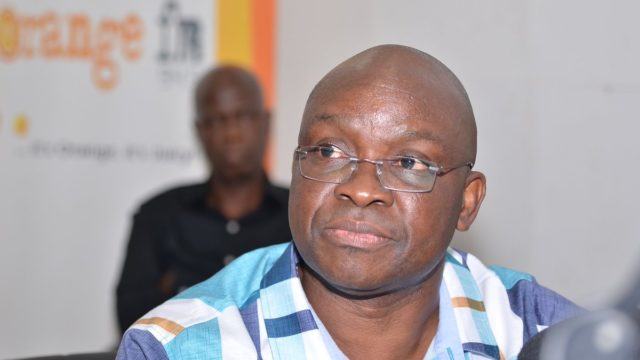
Former Ekiti State Governor, Ayodele Fayose, has alleged that former President Olusegun Obasanjo became critical of President Bola Tinubu after his reported attempt to secure the President’s support for his daughter, Iyabo Obasanjo, to become governor of Ogun State failed.
Fayose made the allegation during an interview on national television, claiming that Obasanjo had approached former Ogun State Governor, Chief Segun Osoba, to help him appeal to Tinubu over his daughter’s governorship ambition.
According to Fayose, the alleged request was partly responsible for the warm reception Obasanjo gave Tinubu during the President’s visit to Ogun State, as well as the former President’s subsequent positive comments about the administration.
He claimed that Obasanjo changed his position after his expectations were not met.
“Obasanjo went to Chief Segun Osoba to help him appeal to President Tinubu for certain things, especially in making his daughter, Iyabo Obasanjo, governor in Ogun State,” Fayose alleged.
He added that Obasanjo’s attitude towards Tinubu changed when the alleged political arrangement failed to materialise, prompting him to revisit issues previously raised by Osoba in his memoir.
Fayose criticised what he described as Obasanjo’s tendency to seek political attention, arguing that the former President often expects to dominate national conversations.
“We are overrating Obasanjo. That is the truth. Nobody gets it done better than Obasanjo. In life, if anybody wants to talk, it is either Obasanjo or nobody,” he said.
The former Ekiti governor, who served during Obasanjo’s presidency, said his assessment was informed by his personal experience with the former Nigerian leader.
He maintained that Obasanjo appeared uncomfortable when political leaders failed to seek his approval on government decisions.
Fayose also recalled that Obasanjo had criticised successive administrations after leaving office, including those of the late President Umaru Musa Yar’Adua and former President Goodluck Jonathan.
He alleged that Obasanjo’s relationship with Jonathan deteriorated after the former President became uncomfortable with the latter’s decision to stop seeking his permission on government matters.
According to Fayose, Obasanjo’s continued criticism of Tinubu should therefore not come as a surprise, given what he described as a longstanding pattern in the former President’s political relationships.
Although he acknowledged that criticism was necessary in a democracy, Fayose argued that public office holders and former leaders should offer practical solutions alongside their criticisms.
“Criticism is good. I criticise people, but you must equally provide solutions, not just run your mouth,” he said.
He further maintained that Obasanjo’s status as a former President did not make his opinions more important than those of other Nigerians.
Fayose also dismissed suggestions that Obasanjo’s criticism of Tinubu would significantly influence the outcome of the 2027 presidential election.
He questioned the former President’s current political followership, arguing that his influence should not be compared with that of politicians actively seeking electoral mandates.
Fayose, however, acknowledged Obasanjo’s contributions to Nigeria’s political history, noting that his legacy would remain part of the country’s historical record.
He said Nigerians should recognise the former President’s past contributions while also assessing his present political relevance objectively.













Comments