

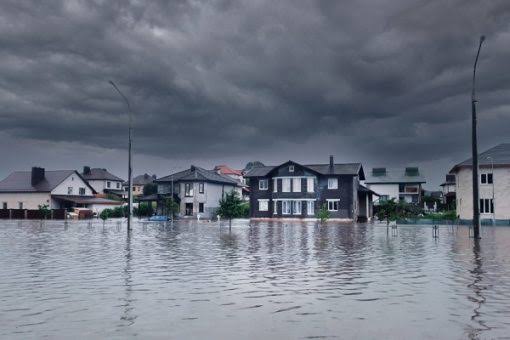
The Lagos State Government has explained the cause of the severe flooding that submerged parts of Ikorodu following last week’s torrential rainfall, attributing the incident to ongoing drainage construction and warning that flash floods will remain a recurring challenge due to climate change.
Commissioner for the Environment and Water Resources, Tokunbo Wahab, said the flooding in Ikorodu was worsened after a contractor temporarily blocked a downstream drainage channel to facilitate construction work.
According to Wahab, the contractor did not anticipate the intensity of the over 12-hour rainfall. As floodwaters rose, the state government directed the contractor to immediately reopen the downstream channel to allow stormwater to drain and restore normalcy to affected communities.
Despite the incident, the commissioner maintained that the government had put resilient flood-control measures in place and is expanding drainage infrastructure across the state. He stressed that contractors would not be allowed to compromise construction standards.
Wahab also blamed persistent flooding on the widespread encroachment of drainage channels and illegal developments by residents and estate developers, describing the trend as a major obstacle to effective flood management.
“We won’t deceive residents,” he said. “Due to the realities of climate change, Lagos will continue to experience flash flooding. Our responsibility is to strengthen infrastructure and improve the state’s resilience.”
The commissioner disclosed that the government has awarded multiple drainage projects across the state, with contractors already working at several locations.
Illegal Structures to Be Demolished
As part of efforts to reduce flooding, Wahab ordered the demolition of buildings obstructing drainage channels at Mehabond Estate in the Lekki area.
He also warned that the government would no longer tolerate any form of encroachment on drainage corridors, floodplains, wetlands, or natural water channels, stating that all illegal structures on such alignments would be removed regardless of ownership.
“We are not going to tolerate any form of encroachment on our drainage alignments and floodplains. Whoever is responsible, those illegal structures will be removed immediately,” he said.
Wetland Reclamation Raises Concern
During an inspection of flood-prone areas, including Agungi, Ajiran, Gravitas Road, Ikota and Iwaya, the commissioner alleged that some developers were illegally reclaiming wetlands without obtaining the necessary approvals.
He explained that wetlands naturally absorb excess rainwater, warning that their destruction weakens the ecosystem and significantly increases flood risks.
Wahab further alleged that developers operating around Graceland Estate and the Ikota River had encroached on protected areas, with some attempting to narrow the river through illegal reclamation.
According to him, the government has directed all such activities to stop immediately while the affected structures face possible demolition.
He reiterated that all reclamation projects must comply with the approved setback of between 150 and 200 metres to preserve the natural flow of the Ikota River and ensure effective stormwater discharge into the lagoon.













Comments