

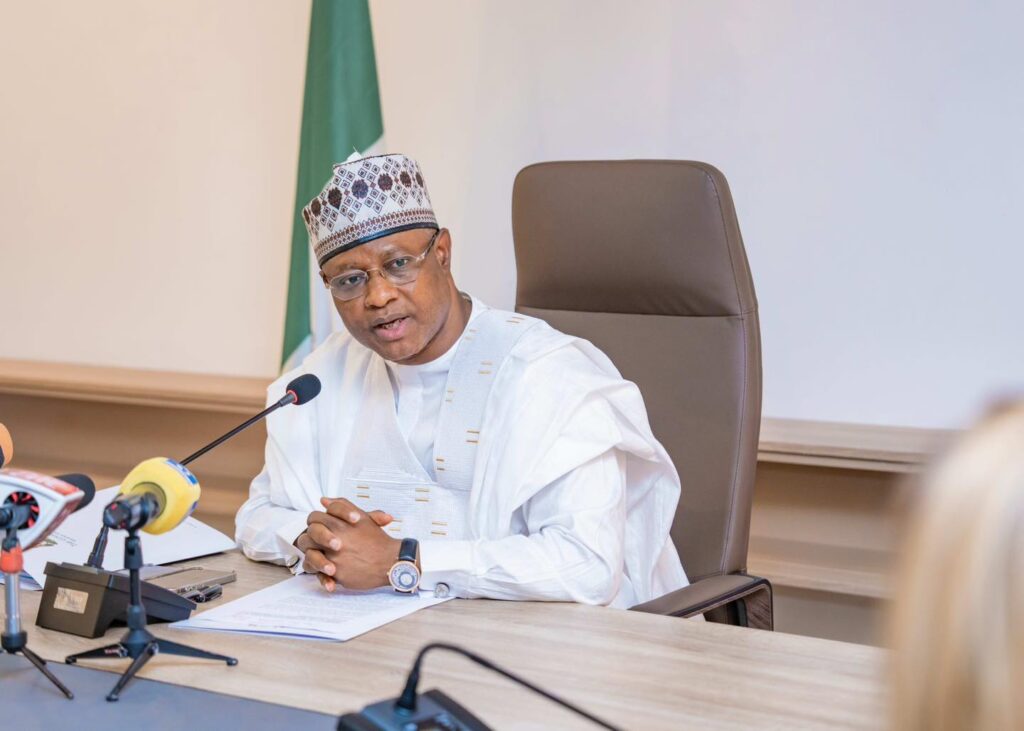
Kaduna State Governor, Uba Sani, has reaffirmed his administration’s commitment to strengthening fiscal resilience, improving service delivery, and ensuring that every public resource delivers measurable value to the people of the state.
The governor made the pledge on Wednesday while receiving members of the Revenue Mobilisation Allocation and Fiscal Commission (RMAFC), led by its Chairman, Dr. Mohammed Bello Shehu, during a courtesy visit at Sir Kashim Ibrahim House, Kaduna.
The RMAFC delegation is currently touring states across the country as part of efforts to review Nigeria’s horizontal revenue allocation formula.
Governor Sani said his administration has demonstrated that prudent financial management, institutional reforms, and strategic investments can deliver transformative results, noting that Kaduna has recorded significant progress in fiscal sustainability, healthcare, and education over the past three years.
He revealed that deliberate reforms, improved technology, and enhanced transparency have driven a significant increase in the state’s Internally Generated Revenue (IGR).
According to the governor, the gains stem from targeted initiatives aimed at diversifying revenue sources, modernising tax administration, and improving compliance through technology-driven systems.
“The introduction of Project C.R.A.F.T. and the PAYKADUNA platform has simplified revenue collection, enhanced transparency, and significantly reduced leakages,” he said.
Governor Sani added that efforts to strengthen public confidence in government have also boosted voluntary tax compliance, as citizens are more willing to pay taxes when they see tangible improvements in public services.
On healthcare, the governor disclosed that his administration has embarked on an extensive expansion and modernisation of health infrastructure across the state, including upgrading one Primary Healthcare Centre in each of the 23 Local Government Areas into a Centre of Excellence.
He also said the government has procured modern medical equipment and three ambulances while recruiting additional healthcare personnel and improving their remuneration.
Highlighting achievements in the education sector, Governor Sani said Kaduna has expanded access to quality education and achieved near-equal enrolment of boys and girls in schools.
He attributed the milestone to sustained collaboration with development partners through the AGILE and ROOSC programmes, which have expanded educational opportunities for girls and other vulnerable children.
The governor further revealed that the number of out-of-school children in Kaduna has dropped significantly from a projected estimate of 535,000 in 2023 to 187,720, based on the state’s latest household mapping exercise.
While acknowledging that challenges remain, he described the progress as encouraging and attributed it to sustained investments, including allocating 26.5 per cent of the state budget to education.
Governor Sani also credited the successful utilisation of UBEC intervention funds, implementation of the World Bank-supported Better Education Service Delivery for All (BESDA) programme, expansion of school feeding and free education initiatives, consolidation of schools in insecurity-prone communities into safer learning environments, and the extension of teachers’ years of service for the gains recorded.
He maintained that Kaduna’s achievements demonstrate what is possible when sound fiscal management is combined with purposeful leadership, strong institutions, and sustained investment in human capital.
Governor Sani also commended the Revenue Mobilisation Allocation and Fiscal Commission for its continued partnership with state governments in revenue mobilisation, fiscal oversight, data verification, and the development of institutional frameworks that enhance governance and service delivery.









Comments