

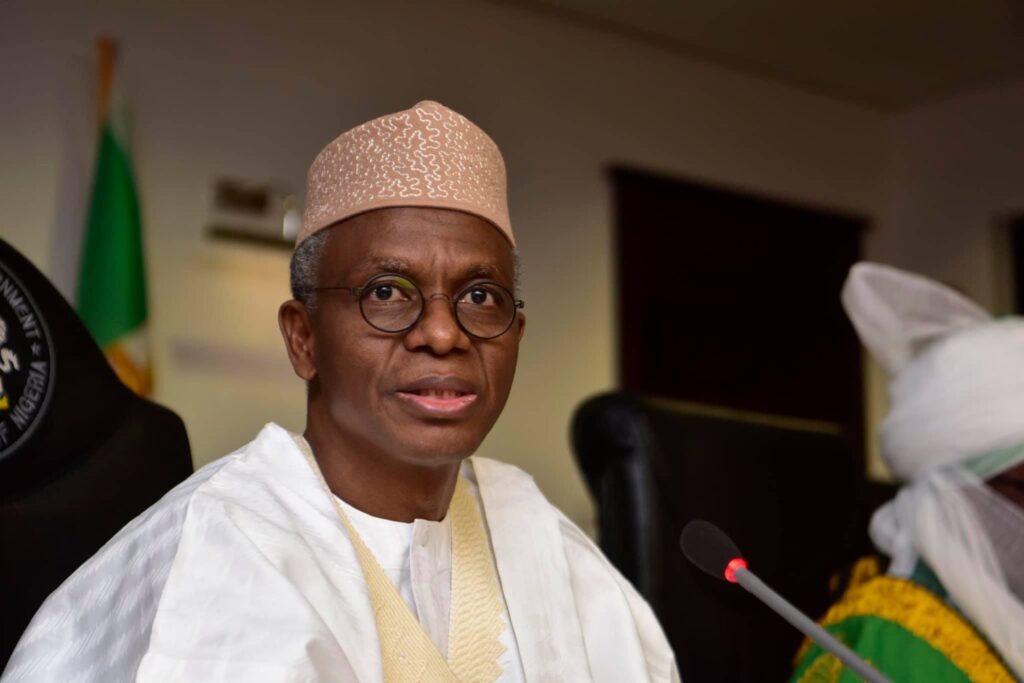
Former Governor of Kaduna state, Mallam Nasir El-Rufai has denied intercepting the telephone conversations of the National Security Adviser (NSA), Mallam Nuhu Ribadu.
Opening his defence in the criminal charge preferred against him by the Federal Government for allegedly wire-tapping Ribadu’s phone conversation on Wednesday, El-Rufai told the trial judge, Justice Joyce Abdulmalik of a Federal High Court sitting in Abuja that, he did not ask anyone to do so.
The former governor told the court that he had never owned equipment used to intercept telephone calls and had no technical knowledge of how to do so.
Led in evidence by his Counsel, Paul Erokoro, SAN, El-Rufai also denied having access to the NSA’s communication networks or devices.
He maintained that his comments during the February interview on Arise Television were political rhetoric and not an admission that he had intercepted Ribadu’s telephone.
“I used ‘we’ to refer to opposition politicians. When I said ‘tapped’, it was an embellishment intended to make the government feel the pain we are feeling.
“It was rhetorical and exaggerated. My objective was to engage in political retort and linguistic flourish,” he told the court.
It would be recalled that Justice Abdulmalik, on October 26, dismissed a no-case submission filed by the former governor in his ongoing trial over alleged unlawful interception of Ribadu’s telephone communications.
The judge, in the ruling, held that the Department of State Services (DSS) had placed before the court sufficient evidence to warrant the court calling on the ex-governor to enter his defence if he so desires and consequently ordered El-Rufai, the sole defendant in the charge, to enter his defence.
El-Rufai had opted for a no-case submission after the DSS closed its case by calling two witnesses.
The former governor had, through his counsel, Akinyemi Aremu urged the court to hold that the prosecution had failed to establish a case requiring him to enter a defence.
In response, the DSS lawyer, Oluwole Aladedoye, SAN, adopted their counter affidavit in opposition to the no-case submission.
Aladedoye argued that the defence failed to address Exhibit “B”, which the prosecution said contained El-Rufai’s alleged admission concerning the tapping of Ribadu’s phone.
He submitted that since the prosecution had established a prima facie case against El-Rufai, the defendant was required by law to enter his defence.
El-Rufai was docked by the DSS on behalf of the federal government on a five-count amended charge, marked, FHC/ABJ/CR/99/2026.
The former governor however denied all the allegations levelled against him by the federal government when the charges were read out to him in the court.
Count one of the charges against the former governor reads, “That you, Malam Nasir EI Rufai, adult, male, intentionally and unlawfully
interfered with the communication of the National Security Adviser (NSA), Nuhu Ribadu, which constitutes Critical National Information Infrastructure (CNI) as contained in designation and protection of Critical National Information Infrastructure Order, 2024 gazetted as Statutory Instrument No. 21 of 2024, as admitted by you on 13th February, 2026 while appearing as a guest on Arise TV station’s prime time programme in Abuja, within the jurisdiction of this
Honourable Court and thereby committed an offence contrary to Paragraph 7 (b) & (c) of the Designation and Protection of Critical National Information Infrastructure Order, 2024 and punishable under Section 5 (1) of the Cybercrimes (Prohibition, Prevention, etc) Amendment Act, 2024.
In count three, the former governor was accused of intentionally and without authorization, intercepted the communications of the NSA, which he admitted on 13th February, 2026, while appearing as a guest on a programme on Arise TV station in Abuja, thereby committed an offence contrary to and punishable under Section 12 (1) of the Cybererimes (Prohibition,
Prevention, etc) Amendment Act, 2024.
The federal government accused El Rufai in count five of using technical equipment or systems which compromised public safety, national security and
instilling reasonable apprehension of insecurity among Nigerians by unlawfully intercepting the communications of the NSA, which he admitted during an interview on Arise TV station’s prime time Programme in Abuja.
END










Comments