

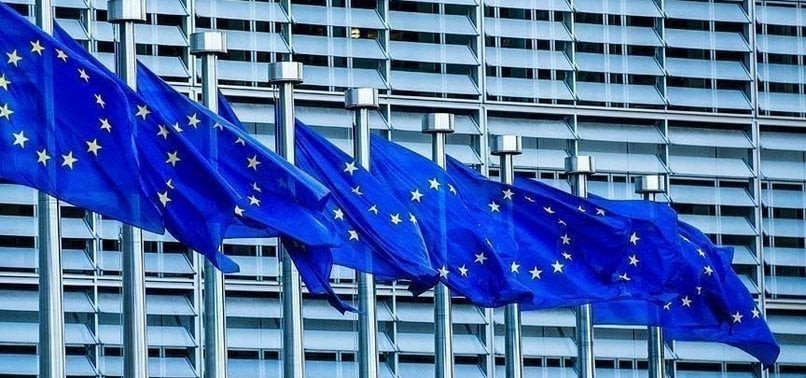
The European Union has clarified that it is not withdrawing from Nigeria’s 2027 general elections, but will deploy a smaller Electoral Expert Mission (EEM) instead of a full-scale Election Observation Mission.
The clarification came after reports that the EU had declined to observe the elections, citing worsening insecurity and alleged hostile treatment of its officials following the publication of its final report on the 2023 general elections.
The EU Delegation to Nigeria and ECOWAS said the reports were inaccurate, describing the reasons attributed to its decision as “pure speculations.”
In a statement signed by the EU Ambassador to Nigeria and ECOWAS, Gautier Mignot, the delegation said it received the Independent National Electoral Commission’s (INEC) formal invitation dated April 17, 2026, to deploy observers for the 2027 elections.
The EU said it responded to the invitation on July 28, 2026, thanking INEC and informing the commission of its decision to deploy an Electoral Expert Mission.
The members of the mission, according to the delegation, will be formally accredited as observers by INEC.
“The EU Delegation further underlines that the two alleged reasons mentioned in the press reports do not appear in the letter: these are pure speculations,” the statement said.
The EU explained that it determines annually the type of electoral missions to deploy to partner countries, taking into account the circumstances of each country and the resources available.
It said the decision to deploy an EEM to Nigeria was made on that basis and would be subject to further consultations with relevant Nigerian authorities.
According to the EU, an Electoral Expert Mission, like an Election Observation Mission, assesses whether an electoral process complies with international, regional and national obligations and commitments relating to democratic elections.
The mission will also prepare a final report containing recommendations for strengthening Nigeria’s electoral framework and future electoral processes.
The EU said the report would be shared with the Nigerian government and could subsequently be made public with its agreement.
The delegation further stressed that the decision would not affect the implementation of the EU-funded “Support to Democratic Governance in Nigeria” project or its wider support for Nigeria’s electoral process.
It urged media organisations to verify reports concerning EU positions and statements with its press and communication office to avoid the publication of inaccurate information.
PDP links EU controversy to electoral concerns
Before the EU clarification, the reported decision to scale back its mission had triggered strong reactions from opposition groups and civil society organisations.
The Taminu Turaki-led Peoples Democratic Party (PDP) said the reported development reinforced concerns over the management of elections under the All Progressives Congress-led Federal Government.
In a statement signed by its National Publicity Secretary, Ini Ememobong, the PDP said the reported reduction in the EU’s election observation presence had heightened concerns among local and international stakeholders ahead of the 2027 polls.
The party alleged that since 2023, the Federal Government had intensified efforts aimed at making the 2027 elections “uncontested in any meaningful sense.”
It accused the administration of using tactics including alleged state-funded crises within opposition parties, coercion and inducement of opposition politicians, intimidation of opposition figures and inflammatory electoral rhetoric.
The PDP cited President Bola Tinubu’s reported statement about “snatch it, take it and run with it” and his reported assertion that “all is fair in politics” as examples of what it described as troubling rhetoric.
The opposition party said any erosion of confidence in the electoral process would ultimately undermine the credibility of elections and democracy.
It pledged to work with other opposition parties, civil society organisations and Nigerians to demand greater transparency, accountability and credibility in the electoral process.
HURIWA warns against insecurity ahead of 2027
The Human Rights Writers Association of Nigeria (HURIWA) also described the reported EU pullback as a warning sign for Nigeria’s democracy and international reputation.
In a statement signed by its National Coordinator, Emmanuel Onwubiko, the organisation urged the Federal Government and security agencies to treat the issue as a wake-up call ahead of the 2027 elections.
HURIWA said insecurity could prevent citizens from travelling freely, political parties from campaigning, electoral officials from reaching polling units and observers from independently monitoring elections.
It called on the Federal Government to intensify efforts against terrorism, banditry, insurgency and other violent crimes capable of disrupting the electoral process.
The organisation also demanded stronger coordination among the Nigerian Army, Nigerian Air Force, Nigerian Navy, Nigeria Police Force and intelligence agencies.
HURIWA further warned against treating international election observers as adversaries because their reports contain criticism of Nigeria’s electoral process.
It said criminal groups must not be allowed to determine where Nigerians can travel, where political candidates can campaign or whether citizens can exercise their constitutional right to vote.
CSOs demand changes to INEC’s results management system
Meanwhile, a coalition of civil society organisations has raised concerns over new features introduced by INEC in the management and transmission of election results.
The groups, operating under the Nigerian Civil Society Situation Room, expressed particular concern over the introduction of an electronic EC8A on the Bimodal Voter Accreditation System (BVAS) and a new backend validation process before results are published on the INEC Results Viewing Portal (IReV).
In a joint position endorsed by 14 civil society organisations, the coalition said INEC’s 2026 Regulations and Guidelines for the Conduct of Elections require polling officials to enter result scores into an electronic EC8A on the BVAS without clearly explaining where the data would be transmitted or its precise purpose.
The organisations also questioned the decision to subject transmitted results to what they described as an unexplained backend validation process before publication on IReV.
They argued that the validation process is not visible to voters, polling agents or election observers, while INEC has yet to clearly explain what is being validated, who conducts the process or how long it should take.
According to the CSOs, any unexplained delay between the transmission and publication of results could create uncertainty and undermine public confidence in the integrity of the electoral process.
They also warned that the introduction of the electronic EC8A could create multiple versions of the same polling-unit result.
The groups noted that the physical EC8A, the scanned result uploaded to IReV, the copy retained on the BVAS and the electronically transmitted e-EC8A could create several layers of the same result, potentially leading to discrepancies and confusion.
The coalition therefore called on INEC to scrap the backend validation of transmitted results before their publication on IReV or, at minimum, subject the process to public and independent scrutiny.
It also urged the electoral commission to publish a comprehensive results-transmission protocol explaining the entire results-management process and allowing independent assessment of the upgraded BVAS and IReV systems.
The CSOs further demanded the removal of the electronic EC8A from the results-management process, arguing that the additional electronic collation layer could potentially expose electoral outcomes to manipulation by compromised officials.
They described the forthcoming Osun State governorship election as a major test of INEC’s results-management system and urged the commission to implement their recommendations as evidence of its commitment to transparency, accountability and electoral integrity.
















Comments