

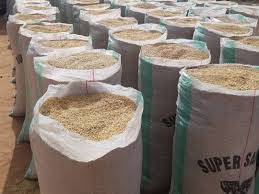
Nigeria’s ambition to achieve self-sufficiency in rice production is facing a major setback, with more than 90 of the country’s 260 integrated rice mills reportedly shutting down completely due to acute shortages of paddy, rising production costs and the influx of cheaper imported rice.
The development has raised fresh concerns about the sustainability of the country’s agricultural transformation agenda, particularly as the National Rice Development Strategy II, launched in 2021 to accelerate investment and boost domestic rice production, is due to expire next month.
The strategy was introduced under the administration of former President Muhammadu Buhari as part of efforts to reduce Nigeria’s dependence on food imports, conserve foreign exchange and strengthen local agricultural production.
In February 2023, Nigeria announced that it had achieved 75 per cent self-sufficiency in rice production, with projections that the country would become a net exporter by 2026.
The achievement was publicly celebrated in January 2023 when the Federal Government, the Central Bank of Nigeria (CBN) and the Rice Farmers Association of Nigeria (RIFAN) unveiled what they described as the world’s largest rice pyramids in Abuja.
The pyramids, comprising one million bags of paddy, were presented as evidence of Nigeria’s growing capacity to produce enough rice for domestic consumption and eventual export.
Nigeria’s annual rice import bill, estimated at approximately $1 billion in 2015, was also reported to have fallen to about $18.5 million by 2021.
However, the gains recorded during that period have come under serious threat, with industry operators reporting a sharp decline in domestic production and the capacity utilisation of rice mills.
Paddy production, which reportedly reached 8.5 million tonnes in 2021, has fallen to approximately 4.8 million tonnes, while mill capacity utilisation has dropped below 30 per cent.
Industry sources disclosed that major integrated rice mills, including Umza in Kano and Stallion in Lagos, are currently operating below 50 per cent of their installed capacities.
Speaking on the crisis, the National Chairman of the Rice Millers Association of Nigeria (RIMAN) and Chairman of the Board of Trustees of the Competitive African Rice Forum for Sustainable Development (CARF-FSD), Nigeria Chapter, Mr Peter Dama, blamed policy inconsistency, particularly the discontinuation of the Anchor Borrowers’ Programme (ABP), for undermining the progress recorded between 2015 and 2023.
Industry operators also identified inadequate agricultural financing, insecurity, escalating input costs and weak supply chains as major factors responsible for the downturn.
They further alleged that the opening of Nigeria’s borders in 2026 had encouraged massive inflows of cheaper foreign rice, particularly through the Seme border with the Republic of Benin.
The operators lamented that despite substantial private-sector investments in rice milling facilities, the government had failed to sustain the agricultural production policies required to keep the facilities operational.
Huge milling capacity, insufficient paddy
One of the most troubling aspects of the crisis is the disparity between Nigeria’s installed rice milling capacity and the quantity of locally produced paddy available to sustain operations.
According to Dama, Nigeria has an installed rice milling capacity of approximately 7.5 million tonnes annually but currently produces only about 4.1 million tonnes of paddy.
The gap has left several processing facilities struggling to secure sufficient raw materials.
Production costs have also increased significantly, making locally processed rice less competitive against imported alternatives.
Industry operators disclosed that a tonne of paddy, which sold for approximately ₦180,000 in 2021, now costs between ₦600,000 and ₦650,000.
Similarly, fertiliser prices have risen from about ₦8,000 to ₦45,000, while petrol has increased from approximately ₦250 to ₦1,400 per litre.
The rising cost of agricultural inputs has increased the cost of producing and processing local rice, leaving domestic millers at a disadvantage.
Dama explained that locally milled rice had become more expensive than imported finished rice entering the country through Lagos ports.
He argued that the competitiveness crisis could not be resolved merely through restrictions on rice imports without addressing the underlying cost of domestic production.
The high cost of farming has also forced some farmers to abandon rice cultivation for alternative crops such as sesame and sorghum, further worsening the shortage of paddy.
The crisis, stakeholders warned, extends beyond rice mill owners to farmers, transporters, distributors, factory workers and millions of Nigerian households that depend on rice as a staple food.
Federal Government identifies policy inconsistency as major challenge
A senior official of the Federal Ministry of Agriculture, who spoke on condition of anonymity, identified policy inconsistency as one of the major challenges affecting the rice value chain.
The official also attributed the widening gap between domestic production and consumption to population growth, rural-urban migration and changing food consumption patterns.
He noted that Nigeria remains Africa’s largest rice producer but also one of its biggest importers because local production is insufficient to meet domestic demand.
According to him, the country’s current rice self-sufficiency level has declined to approximately 69 per cent.
He identified the rising prices of fertilisers, improved seeds and agrochemicals as major obstacles confronting farmers.
The official particularly lamented the end of the Presidential Fertiliser Initiative (PFI), under which urea was imported from Morocco and supplied to fertiliser blenders at subsidised rates, enabling them to sell the products to farmers at relatively affordable prices.
He explained that fertiliser blenders now purchase urea at market prices, while geopolitical tensions in the Middle East, particularly disruptions around the Strait of Hormuz, have further complicated the fertiliser supply chain.
The combination of expensive inputs and rising production costs has pushed up the prices of paddy supplied to millers.
He added that millers were also battling high operational costs, particularly their dependence on diesel-powered equipment instead of more affordable and reliable electricity.
The official observed that rice-producing countries that export to Nigeria often subsidise their agricultural sectors, giving their products a competitive advantage over locally processed rice.
He therefore recommended government intervention through affordable agricultural inputs and other production incentives to restore the competitiveness of Nigerian rice.
Collapse of Anchor Borrowers’ Programme worsens crisis
At the centre of the unfolding crisis is the discontinuation of the Anchor Borrowers’ Programme, introduced by the Central Bank of Nigeria under its former Governor, Godwin Emefiele.
The programme was designed to reduce Nigeria’s dependence on food imports by connecting smallholder farmers with agricultural processors and providing access to affordable financing.
Between 2015 and 2021, the initiative reportedly helped increase domestic paddy production from 2.5 million tonnes to 8.5 million tonnes.
Figures provided by industry stakeholders also indicated that official rice imports declined from 2.4 million tonnes to less than 400,000 tonnes during the period.
Under the programme, farmers received improved seeds, fertilisers and herbicides on credit, with repayment expected in the form of harvested paddy.
The arrangement also connected farmers to rice millers who provided guaranteed markets for their produce.
Interest rates were pegged at nine per cent, significantly below the commercial lending rates of approximately 28 per cent cited by industry operators.
The financing structure addressed two major challenges facing farmers: access to agricultural inputs and guaranteed markets for harvested produce.
It also provided rice millers with a relatively reliable supply of raw materials.
However, the programme became controversial following allegations of politicisation, poor loan recovery and the inclusion of individuals who were not genuine farmers among its beneficiaries.
Although more than ₦1.1 trillion was reportedly disbursed under the initiative, loan recovery was said to have fallen below 30 per cent.
The CBN subsequently discontinued the programme in 2023 without putting an effective replacement mechanism in place.
Dama estimated that more than 40 per cent of smallholder farmers who participated in the programme had since abandoned rice cultivation for other crops.
He argued that the Federal Ministry of Agriculture’s dry-season farming initiatives had not sufficiently addressed the financing needs of genuine farmers, while the Bank of Agriculture lacked the resources required to provide credit on the scale needed by the industry.
According to him, the problem is not necessarily that the Anchor Borrowers’ Programme must be restored in its original form, but that its shortcomings should be addressed while establishing a functional alternative.
He maintained that dismantling the programme without providing a sustainable replacement had exposed the rice industry to the very production challenges it was designed to overcome.
Cheaper foreign rice floods Nigerian markets
The increasing availability of cheaper imported rice has emerged as another major source of concern for local millers.
Dama alleged that more than 2.5 million tonnes of foreign rice had entered Nigeria through the Benin Republic’s Cotonou port and porous land borders in 2026.
He claimed that imported rice was selling for between ₦52,000 and ₦60,000 per 50kg bag, compared with ₦75,000 to ₦80,000 for locally produced rice.
The price difference has made imported rice more attractive to consumers, particularly households struggling with the rising cost of living.
Dama further alleged that some lower-quality imported rice was being repackaged and sold as Nigerian rice in major markets across Lagos, Abuja, Kano and Ibadan.
The allegation, if established, could raise serious concerns about consumer protection, regulatory enforcement and the credibility of locally produced rice brands.
He also identified differences in import tariffs between Nigeria and the Benin Republic as a factor encouraging cross-border rice trade.
According to him, Nigeria imposes a 70 per cent duty on rice imports, compared with 35 per cent in Benin, creating incentives for traders to route foreign rice through the neighbouring country.
Dama called for the implementation of the ECOWAS Rice Roadmap 2025–2035, which provides for a harmonised common external tariff of 35 per cent for paddy and 50 per cent for milled rice across the 15-member regional bloc.
He argued that harmonised tariffs, supported by technology-driven border surveillance, would help reduce incentives for smuggling and strengthen regional rice production.
Lake Rice disappears from Lagos markets
The disappearance of Lake Rice from Lagos markets provides another example of the difficulties associated with sustaining agricultural partnerships beyond their initial launch.
In 2016, Lagos and Kebbi states entered into a Memorandum of Understanding to promote rice cultivation in Kebbi, with processing, packaging and distribution to be handled in Lagos.
The initiative was designed to connect farmers in northern Nigeria with one of the country’s largest consumer markets in the South.
Under the arrangement, paddy produced in Kebbi was expected to be transported to Lagos for processing and packaging before distribution to consumers under the Lake Rice brand.
However, the partnership eventually collapsed.
Lagos State Governor Babajide Sanwo-Olu’s Special Adviser on Agriculture and Food Systems, Dr Oluwarotimi Fashola, attributed the collapse to the failure to adhere to the original understanding between the two states.
According to him, the agreement was for Kebbi to supply paddy to Lagos for milling and packaging, rather than for finished rice supplied by a private consulting firm to be repackaged and distributed as Lake Rice.
The development has raised questions about transparency, accountability and the implementation of public-private agricultural partnerships.
Industry stakeholders argued that the collapse of the initiative demonstrates how potentially beneficial agricultural projects can fail when institutional interests and implementation shortcomings undermine their original objectives.
Women farmers struggle with financing challenges
The decline in agricultural financing has also affected women farmers, particularly in Kebbi State.
The Chairperson of the Kebbi State Female Farmers Associations, Hajia Hadiza Kola, identified inadequate access to funding as a major obstacle to expanding agricultural production following the discontinuation of the Anchor Borrowers’ Programme.
She explained that women face additional social challenges because farming is traditionally regarded in some communities as an occupation largely reserved for men.
Some women also struggle to secure the support of their husbands to participate in commercial farming.
Despite these difficulties, advocacy programmes across towns and villages have encouraged hundreds of women to register with female farmers’ associations and participate in agricultural activities, including home gardening.
Their experiences highlight the importance of providing affordable agricultural financing to women and other vulnerable groups within the farming sector.
Stakeholders warned that without accessible credit facilities, the contribution of women to Nigeria’s food production drive would remain limited.
Ebonyi rice mills suffer similar fate
The challenges confronting Nigeria’s rice industry are also evident in Ebonyi State, where several government-backed and privately owned rice milling projects have reportedly collapsed.
During the administration of former Governor Martin Elechi, the state established modern rice cluster mills in three senatorial districts, located in Izzi, Ikwo and Oso Edda, around 2013.
The facilities were established to complement the existing Abakaliki rice mill through modern processing technology.
The mills initially generated optimism as they produced polished rice with improved packaging under the EbonyRice brand.
However, the facilities had reportedly deteriorated significantly by 2025, with operations gradually grinding to a halt.
A former worker at the mills, Mr Onyeka Ndukwe Nkama, said the Elechi administration handed over the facilities to former Governor David Umahi, who subsequently transferred the projects to the present administration in a deteriorating condition.
According to Nkama, the Oso Edda facility was the first to shut down, followed by the Ikwo mill, while the Izzi facility, which continued operating for the longest period, had also reportedly ceased operations.
He attributed the collapse largely to inadequate supplies of paddy to sustain the facilities.
Nkama explained that the mills initially struggled to obtain sufficient paddy from local farmers, forcing operators to source raw materials from northern Nigeria.
However, the arrangement was not sustainable, and the facilities gradually became idle.
He said the shortage of raw materials eventually led to the deterioration of machinery, while workers abandoned the facilities in search of alternative employment.
The crisis also affected the private rice milling industry in the state.
Chief Charles Ugwu, who established a private rice mill in Ikwo, had introduced high-quality rice brands known as Ebony Gold and Ebony Silver.
The facility, however, has also reportedly shut down because of similar challenges involving inadequate paddy supplies.
The experience of Ebonyi’s rice mills mirrors the wider challenges facing Nigeria’s rice industry: investments in processing infrastructure cannot be sustained without adequate local production, affordable financing and reliable agricultural supply chains.
Future of Nigeria’s rice industry uncertain
With more than 90 integrated rice mills reportedly shut down and several others operating significantly below capacity, stakeholders are warning that Nigeria risks losing much of the progress recorded during the previous decade.
The expiration of the National Rice Development Strategy II next month has further heightened concerns about the absence of a clear and sustainable policy framework for the sector.
Industry operators are calling for renewed investment in agricultural financing, improved security for farming communities, affordable fertilisers and other inputs, reliable electricity, stronger border surveillance and policies that protect local production without undermining market competition.
They also insist that government interventions must prioritise genuine farmers and address the structural weaknesses that undermined previous agricultural programmes.
For Nigeria, the challenge is no longer simply establishing rice mills or announcing ambitious production targets. It is ensuring that farmers can produce sufficient paddy at competitive prices and that processors have the raw materials, financing and infrastructure required to keep their facilities running.
Without urgent and coordinated intervention, the country’s much-publicised rice revolution could become another example of ambitious agricultural investments undermined by inconsistent policies and inadequate implementation.

















Comments