

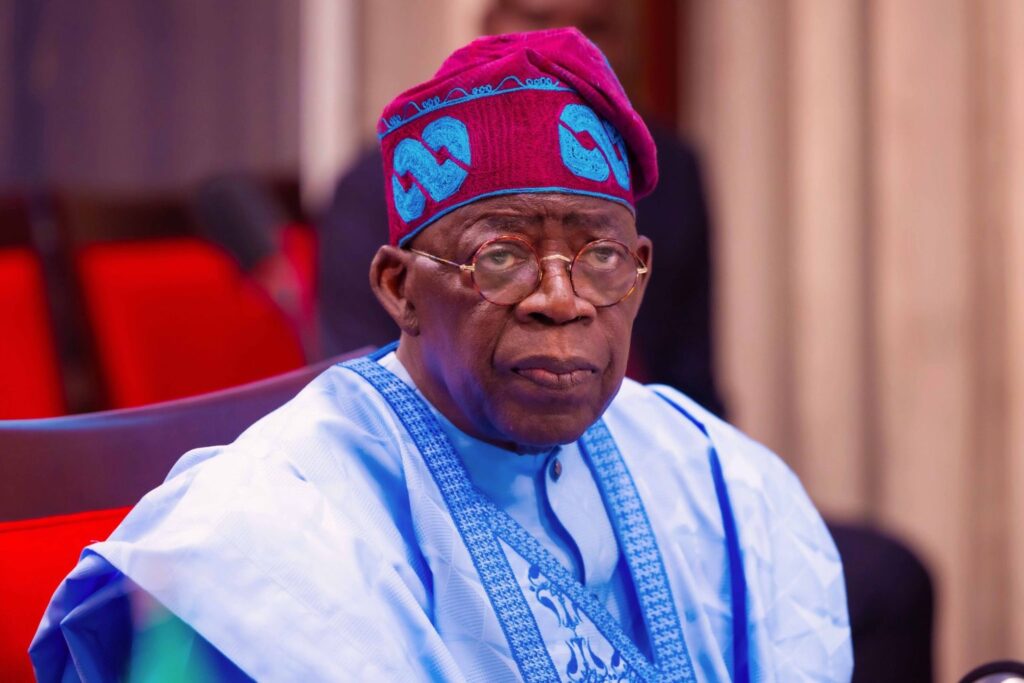
The Alliance of Sahel States (AES), comprising Burkina Faso, Mali and Niger, has rejected President Bola Ahmed Tinubu’s claim that insecurity in the Sahel is worsening Nigeria’s security challenges.
The bloc has also summoned Nigeria’s chargé d’affaires in Ouagadougou, Burkina Faso, in a fresh diplomatic dispute that highlights the growing tensions between Abuja and the AES countries.
The diplomatic row followed remarks made by President Tinubu on July 30 while addressing traditional rulers in Nigeria.
Speaking about the country’s worsening security situation, Tinubu said some of the terrorists operating in Nigeria were foreigners and linked the challenges to instability in neighbouring Sahel countries.
“Some of them (the terrorists) are not Nigerians. You see, the problem of insecurity in Mali, Burkina Faso and Niger is worsening our difficulties,” Tinubu said.
The remarks came amid Nigeria’s ongoing battle against jihadist groups, bandits and kidnappers across several states, with security threats increasingly crossing borders within the wider Sahel and Lake Chad regions.
However, the AES rejected the president’s assessment, describing it as inaccurate and dismissive of the sacrifices made by security forces and civilians across the region.
Speaking on behalf of the bloc, Burkina Faso’s Foreign Minister, Karamoko Jean-Marie Traoré, said Burkina Faso, Mali, Niger and Nigeria were all victims of the same security crisis.
“Burkina Faso, Mali, Niger and Nigeria face the same enemy. We would have preferred a more accurate presentation of the security situation, rather than placing the blame for a complex situation on neighbouring countries, at the risk of fuelling misunderstandings and frustrations between peoples bound by history, geography, and fraternity,” Traoré said.
He argued that the history of the region showed that Niger had been confronting Boko Haram insurgency before violent extremism expanded into Mali and Burkina Faso.
“We are not responsible for what is happening to us. The real enemies are elsewhere,” the minister added.
Despite the criticism, Traoré said the AES remained willing to maintain dialogue and security cooperation with Nigeria.
“We favour continued engagement with Nigeria in a ‘joint and shared fight’ against insecurity,” he said.
The latest diplomatic dispute adds to years of strained relations between Nigeria and the three Sahelian countries, particularly since Tinubu assumed the chairmanship of the Economic Community of West African States (ECOWAS) in 2023.
Following the military coup in Niger, ECOWAS imposed sanctions on the country and threatened military intervention to restore constitutional order. The measures were later lifted after the bloc abandoned its military option.
Relations deteriorated further after Burkina Faso, Mali and Niger formally withdrew from ECOWAS and established the AES as an alternative political and security alliance.
The three countries have also strengthened their security ties with Russia, while Nigeria has continued to support regional counter-terrorism cooperation through ECOWAS and other multilateral frameworks.
Tensions between Nigeria and the AES bloc also escalated in December 2025 when Burkina Faso detained 11 Nigerian Air Force personnel after their C-130 aircraft made an emergency landing in Bobo-Dioulasso while en route to Portugal for maintenance.
The AES initially described the incident as an unfriendly act, alleging that the Nigerian aircraft had entered its airspace without authorisation. The personnel and crew were subsequently released following diplomatic engagements between the two countries.
The latest exchange underscores the delicate security and diplomatic relationship between Nigeria and the AES states, despite their shared struggle against terrorism and transnational criminal networks across the region.















Comments