

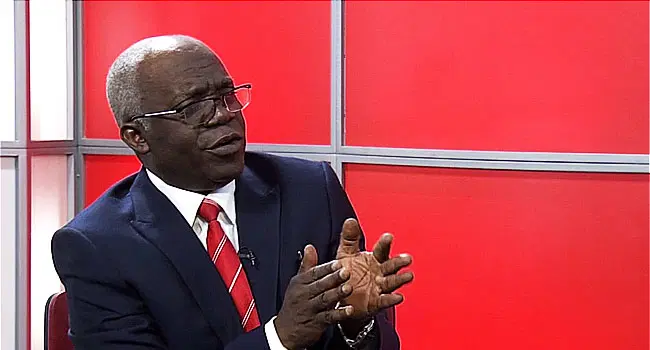
Human rights lawyer and Senior Advocate of Nigeria (SAN), Femi Falana, has called on the Federal Government to launch a transparent investigation into the controversy surrounding the alleged Presidential Foreign Intervention Promotion Council (PFIPC), insisting that the Presidency’s explanation has failed to address key questions raised by Nigerians.
Speaking on Friday during an interview on Frontline, a current affairs programme on Eagle 102.5 FM in Ilese-Ijebu, Ogun State, Falana said the government’s response to the controversy was inadequate and had exposed Nigeria to public embarrassment.
“Unfortunately, I think there is more to this matter than meets the eye. Nigerians have not been given the full facts,” Falana said, adding that the government must provide a more detailed explanation in the interest of transparency and accountability.
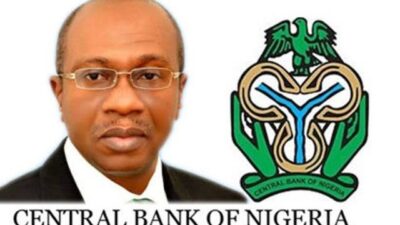
The senior advocate questioned how an agency allegedly not established by law could have appeared in the 2026 Appropriation Act, operated from the Federal Secretariat, maintained accounts with the Central Bank of Nigeria (CBN), and reportedly had about 300 civil servants deployed to it.
“How did an agency that is not created by law find its way into the Appropriation Act of Nigeria? How did that body get an office in the Federal Secretariat? How did that body successfully open accounts in the Central Bank of Nigeria? How did the Head of Service post about 300 staff to that office?” he asked.
Falana argued that the controversy extends beyond the prosecution of the individual accused of promoting the council, saying several government institutions, including the Presidency, the National Assembly, the CBN and the Office of the Head of the Civil Service, must explain their roles in the matter.
According to him, Section 81 of the Constitution provides that appropriation bills originate from the Executive before being transmitted to the National Assembly, making it necessary for the Federal Government to explain how the alleged agency found its way into the national budget.
“You cannot have an agency that is not created by law in the budget of a country. The National Assembly members will also have to explain who authorised them to insert the body into the budget,” he stated.
Falana further described the Presidency’s official statement as leaving “gaping holes” that only a comprehensive investigation could resolve.
“If this is a conman that can con the Presidency into issuing a letter of appointment, con the Central Bank into opening accounts, and con the National Assembly into inserting the agency into the budget, I think the government is kidding,” he said.
The senior lawyer also called for an independent investigation into the alleged involvement of the Chief of Staff to the President, Femi Gbajabiamila, suggesting that he should temporarily step aside to ensure a credible and impartial inquiry.
“The government has a duty to ask Mr. Gbajabiamila to step aside to allow for a full investigation in the interest of the country and even in his own interest,” Falana said.
While maintaining that criminal proceedings against the alleged promoter of the council should continue, Falana stressed that the courts would not resolve broader institutional questions surrounding the council’s alleged recognition and operations.
“The law must be allowed to take its course. But the court is not going to tell us who opened an account in the Central Bank, who inserted the agency into the budget, or why it was signed by the President,” he noted.
He urged the Federal Government to revisit the matter and issue a more comprehensive statement backed by a transparent investigation involving all relevant agencies and officials.
“The government will have to go back to the drawing board and issue another statement that will be acceptable to Nigerians by assuring them that there is no cover-up,” he added.
Background
The controversy began on June 11, 2026, when the Office of the Chief of Staff to the President issued a disclaimer distancing the Presidency from the Presidential Foreign Intervention Promotion Council (PFIPC) and its alleged Director-General, Prince Adeniyi Adeyemi Matthew.
The Presidency maintained that no such council exists under President Bola Tinubu’s administration, describing Adeyemi as an impostor who allegedly forged appointment documents and falsely claimed official recognition.
However, the matter escalated after documents from the 2026 Appropriation Act revealed a budgetary allocation of about ₦1.3 billion to an entity listed as the Presidential Economic Advisory Council/Presidential Foreign Intervention Promotion Council.
The discovery sparked widespread public concern over how an agency the Presidency insists does not exist could appear in the federal budget with allocations for personnel, overhead and capital expenditure.
Adeyemi has since denied allegations of forgery, claiming the council operated from the Federal Secretariat, maintained CBN accounts and had personnel deployed through the Office of the Head of the Civil Service.
The controversy has continued to generate intense political and public debate, with opposition figures, civil society organisations and governance advocates demanding an independent investigation into the circumstances surrounding the alleged agency and its inclusion in the 2026 federal budget.










Comments