

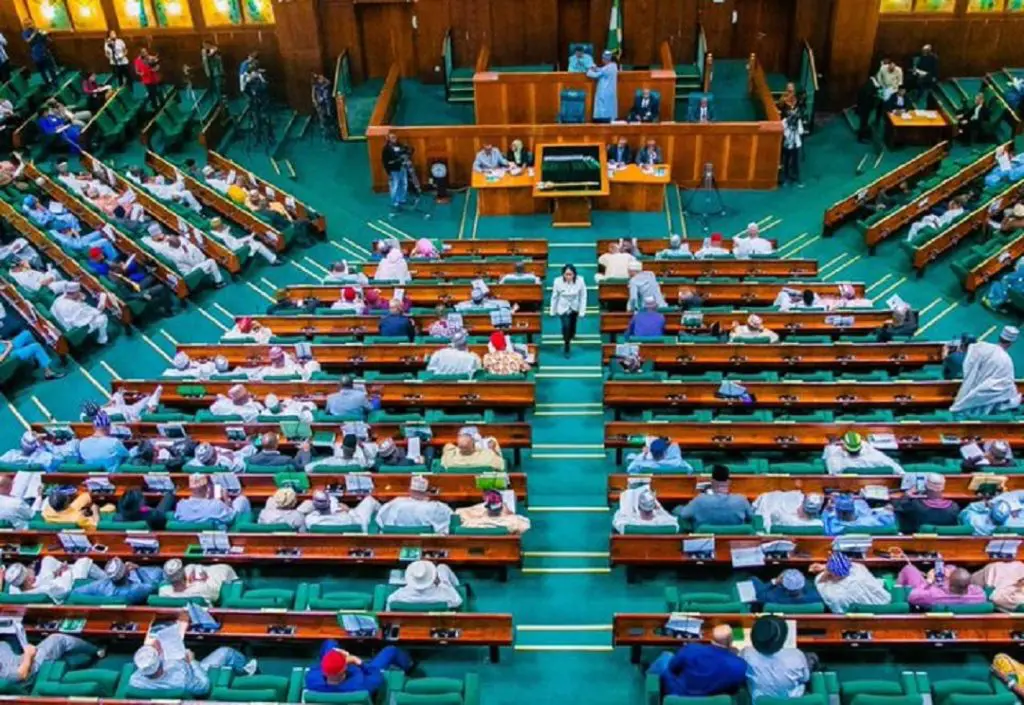
The House of Representatives has passed a landmark constitutional amendment bill seeking to establish state police across the country, marking one of the most significant shifts in Nigeria’s security architecture since the return to democracy in 1999.
The bill, titled “A Bill for an Act to Alter the Constitution of the Federal Republic of Nigeria, 1999 to Provide for the Establishment of State Police and for Related Matters (Sixth Alteration) Bill, 2026,” was approved on Thursday during plenary at the Committee of the Whole, presided over by Speaker Rt. Hon. Tajudeen Abbas.
The proposal was presented by the Deputy Speaker and Chairman of the House Committee on Constitution Review, Hon. Benjamin Kalu, who led debate and canvassed support for a decentralised policing structure to address Nigeria’s worsening security challenges.
Voting was conducted manually, with lawmakers indicating their positions by a show of hands. At the end of proceedings, 289 members voted in support of the bill, one abstained, and none voted against it—reflecting overwhelming bipartisan consensus.
The amendment seeks to fundamentally restructure policing in Nigeria by creating both Federal and State Police formations. It modifies Section 214 of the Constitution to formally establish the two-tier system, while empowering the National Assembly to set operational standards for state police services.
Under the framework, no state police force can begin operations unless it is established by a law of the State House of Assembly and certified to meet national minimum standards set by federal legislation. Until then, the Federal Police will retain policing authority in all states.
To prevent abuse and ensure coordination, the bill limits federal intervention in state policing to cases of complete breakdown of law and order, or upon request by a state governor, or where a state police becomes incapacitated.
The bill also introduces major changes to police leadership structure. The Inspector-General of Police will be appointed by the President on the recommendation of the Nigeria Police Council and subject to Senate confirmation. Similarly, State Commissioners of Police will be appointed by governors, subject to approval by State Houses of Assembly.
Governors are also empowered to issue lawful directives to State Commissioners of Police on matters of security and public order, although disputes over legality may be referred to the Nigeria Police Council for final resolution.
The proposed amendment further replaces references to the National Police Council and Federal Police Service Commission with the Nigeria Police Council and the Police Service Commission.
With House approval secured, the bill now moves to the Senate for concurrence. If passed there, it must also be ratified by at least two-thirds of State Houses of Assembly and receive presidential assent before becoming part of the Constitution.
If ultimately enacted, the reform is expected to usher in a decentralised policing system aimed at improving internal security and strengthening responses to banditry, kidnapping, terrorism, and other violent crimes across the country.


















Comments