

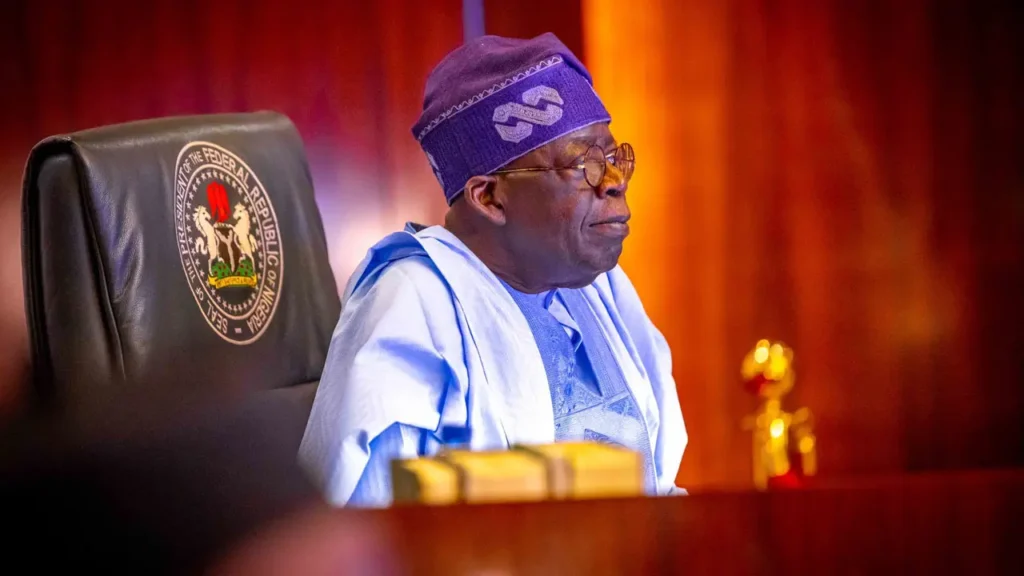
Fresh criticism has emerged over President Bola Tinubu’s economic leadership, with analysts and commentators describing the appointment of Wale Edun as Minister of Finance—and his subsequent elevation to Coordinating Minister of the Economy—as a significant misstep driven more by loyalty than competence.
The critique argues that the decision reflects a broader pattern in Nigerian governance, where key economic positions are allegedly filled based on trust and political alignment rather than merit and expertise. Observers warn that such choices may have long-term consequences for a country already grappling with declining living standards and economic instability.
According to the argument, the role of a finance minister in a modern economy requires more than technical accounting skills. Instead, it demands strategic economic vision, policy innovation, and the capacity to manage complex fiscal realities. Critics point to past administrations, particularly under former President Muhammadu Buhari, where finance ministers Kemi Adeosun and Zainab Ahmed were also accused of underperformance during a period widely regarded as economically challenging.
The concerns extend beyond individual appointments to what is described as a systemic issue—“the privatization of public office.” This refers to a governance culture where political power is treated as a personal asset, used to reward allies and consolidate influence, often at the expense of national interest.
Drawing a stark comparison with Singapore’s development trajectory under Lee Kuan Yew, analysts highlight how leadership quality has played a decisive role in shaping national outcomes. While Nigeria and Singapore reportedly had comparable economic indicators in the early 1970s, Singapore has since transformed into one of the world’s most prosperous economies, despite lacking natural resources. Nigeria, by contrast, continues to face declining per capita income and widening inequality.
The divergence, experts argue, lies in leadership principles. Singapore’s governance model emphasizes institutional integrity, transparency, and strict accountability—qualities seen as lacking in Nigeria’s political system. In Nigeria, critics say, executive overreach, weak legislative oversight, and unresolved corruption allegations among public officials have eroded the checks and balances essential for effective governance.
Concerns have also been raised about the management of public resources and infrastructure development. Nigeria’s persistent power supply crisis, for instance, is cited as evidence of policy failure. Despite significant financial investments over the years—including billions of dollars allocated to power sector reforms during past administrations—electricity generation remains inadequate.
In contrast, countries like Egypt are expanding their energy capacity aggressively, with plans to add thousands of megawatts in the coming years. Analysts argue that Nigeria’s inability to achieve similar progress reflects not a lack of intelligence, but a failure in leadership application and accountability.
Further criticism centers on alleged irregularities in contract awards and loan agreements, with claims that major projects are sometimes executed without proper legislative approval or competitive processes. This, critics say, undermines value for money and fosters corruption.
The debate ultimately returns to a fundamental question: what is missing in Nigeria’s leadership? Many observers point to character—defined as integrity, accountability, and commitment to public service—as the critical deficit.
As Nigeria approaches nearly three decades of democratic governance in the Fourth Republic, the stakes remain high. With economic pressures mounting and public expectations rising, the quality of leadership—and the decisions it produces—continues to shape the nation’s trajectory.














Comments