

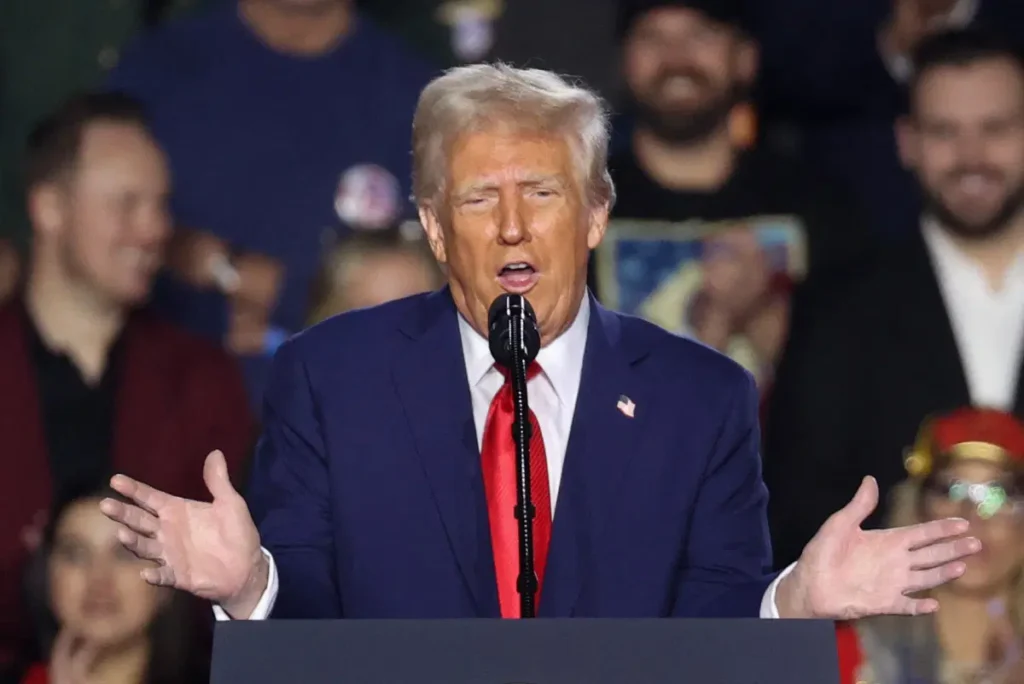
U.S. President Donald Trump has declared that ongoing military operations against Iran are progressing faster than anticipated, as he intensified calls for Tehran to enter negotiations.
Speaking during his first cabinet meeting since the conflict began nearly a month ago, Trump said the joint U.S.-Israeli campaign was “extremely” ahead of its original timeline.
“We estimated it would take approximately four to six weeks to achieve our mission. Twenty-six days in, we’re significantly ahead of schedule,” Trump stated, adding that the Iranian leadership was internally acknowledging what he described as a decisive defeat.
Despite these claims, Iranian officials have publicly rejected the idea that direct negotiations are underway.
Push for Negotiations Amid Denials
Trump maintained that Iran is eager to strike a deal, even as Tehran continues to deny any active talks. U.S. envoy Steve Witkoff confirmed that Washington had sent a 15-point proposal to Iran through Pakistan, signaling ongoing indirect diplomatic efforts.
Witkoff suggested there were “strong signs” Iran might reconsider its position, describing the current moment as a potential turning point.
“We will see where things lead, and if we can convince Iran that this is the inflection point, with no good alternatives other than further destruction,” he said.
Criticism of NATO Allies
The U.S. president also criticized NATO allies for what he called a lack of support, particularly after they declined to deploy naval forces to secure the Strait of Hormuz, a critical global oil route affected by the conflict.
Trump singled out the United Kingdom, dismissing its late offer to send aircraft carriers and describing British naval assets as inferior to those of the United States.
“We’re very disappointed with NATO, because NATO has done absolutely nothing,” he said.
Cabinet Reactions and Military Stance
Key administration figures echoed Trump’s position during the meeting. Secretary of State Marco Rubio praised the Pentagon’s operational effectiveness, while Defense Secretary Pete Hegseth emphasized continued military pressure alongside openness to a diplomatic resolution.
Vice President JD Vance framed the campaign as necessary to prevent Iran from acquiring nuclear weapons.
Hegseth struck a dual tone, saying the U.S. “welcomes a deal” but will continue military operations in the meantime, adding that negotiations would proceed “with bombs” if necessary.
Rising Tensions, Uncertain Outcome
The conflict, now approaching its fourth week, has escalated tensions in the region, particularly around energy supply routes and global security concerns. While Washington signals urgency for a deal, Iran’s continued denial of talks underscores the uncertainty surrounding any near-term resolution.

















Comments