


Nigeria’s worsening electricity crisis has sparked growing public outrage, with increasing calls for President Bola Ahmed Tinubu to remove Minister of Power Adebayo Adelabu amid persistent nationwide blackouts.
Over the past four months, electricity supply has remained unstable, with generation fluctuating between 2,000 and 4,000 megawatts—far below the country’s demand for a population exceeding 250 million. As of March 29, 2026, electricity distribution companies received only 2,855 megawatts, underscoring the severity of the supply deficit.
Electricity distribution companies (Discos) have attributed the erratic supply to reduced generation levels, while generation companies (Gencos) point to gas supply shortages caused by mounting debts reportedly exceeding ₦4 trillion.
The ongoing crisis has placed immense strain on households and businesses, many of which continue to grapple with unreliable power supply and rising operational costs.
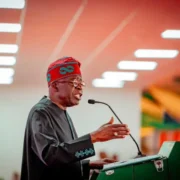
Amid mounting criticism, Adelabu recently issued a public apology, acknowledging the sector’s challenges. In response, President Tinubu, speaking at the All Progressives Congress (APC) convention, announced the proposed creation of the Grid Asset Management Company (GAMCO) as a potential solution to address structural and financial constraints within the sector.
“The GAMCO will inject 150,000 megawatts into the electricity corridors,” the president stated, assuring Nigerians that efforts are underway to stabilize power supply.
However, many stakeholders argue that policy proposals and apologies are no longer sufficient, calling instead for immediate and measurable improvements.
Divergent Views on Accountability
Speaking with DAILY POST, Eze Onyekpere, Lead Director of the Centre for Social Justice, called for Adelabu’s immediate removal, describing his tenure as lacking direction and innovation. He emphasized that effective leadership is critical in addressing the country’s power challenges and urged the president to act decisively.
Onyekpere also referenced Tinubu’s campaign promise to improve electricity supply, noting that current realities fall significantly short of expectations. He insisted that the minister should either resign or be relieved of his duties.
In contrast, Professor Emeritus of Petroleum Economics, Wumi Iledare, argued that the crisis stems from systemic governance failures rather than the competence of the minister.
According to Iledare, the federal government must take responsibility for structural weaknesses in the sector, particularly flaws in the original privatization framework. He warned that without urgent reforms, similar challenges could extend to the oil and gas industry.
“The problem of the power sector in Nigeria is governance, not the competence of the minister,” he stated, adding that the privatization process was poorly structured and lacked accountability mechanisms.
Pathways to Reform
Iledare advocated for decentralizing Nigeria’s electricity market into regional systems, encouraging collaboration among states rather than isolated operations. He also stressed the need to strengthen institutional frameworks and improve coordination within the Ministry of Power.
While acknowledging some progress in sector agencies, he maintained that sustainable reform depends on building strong institutions rather than focusing solely on individuals.
As the power crisis persists, the debate continues over whether leadership changes or deep structural reforms will offer a lasting solution to Nigeria’s electricity challenges.











Comments