

Nigeria’s petrol imports fell sharply by 42.2 per cent in January 2026, dropping to 24.8 million litres per day from 42.8 million litres recorded in December 2025, according to the latest report by the Nigerian Midstream and Downstream Petroleum Regulatory Authority (NMDPRA).
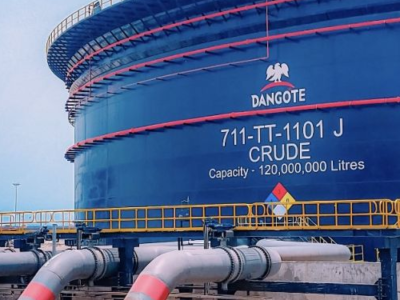
The report, released at the weekend, shows a significant shift in supply dynamics, driven largely by increased domestic refining. Supply from the $20 billion Dangote Petroleum Refinery rose by 25.3 per cent month-on-month to 40.1 million litres per day in January, up from 32 million litres per day in December.
Despite the surge in local refining output, total daily petrol supply declined by 12.5 per cent to 64.9 million litres in January, compared to 74.2 million litres in December. The regulator attributed improved stock levels to stronger supply performance, noting that the country recorded 33 days of petrol sufficiency during the month. Days of sufficiency stock increased by 13 per cent between December and January.
While the official daily consumption benchmark remains at 50 million litres, actual consumption based on truck-out data averaged 60.2 million litres per day in January. The NMDPRA also reported average daily truck-out volumes of 19.2 million litres for diesel (Automotive Gas Oil), 3.5 million litres for aviation fuel, and 4,860 metric tonnes of Liquefied Petroleum Gas (LPG).
On refinery performance, the Dangote Refinery operated at 61.27 per cent of its installed capacity during the month. Meanwhile, the three Federal Government-owned refineries managed by NNPC Limited remained shut down.
In a related development, Wintersmith Refining and Petrochemical Company Limited has commenced crude oil test runs for the second phase of its refinery project in Imo State. The facility, commissioned in November 2020 with an installed capacity of 5,000 barrels per day (bpd), produces diesel, dual-purpose kerosene, naphtha, and heavy fuel oil for the domestic market.
The Phase Two expansion, currently undergoing commissioning, is expected to raise total refining capacity to approximately 50,000 bpd upon completion. The NMDPRA confirmed that the introduction of hydrocarbon into the plant’s processing units has begun, signalling the transition from mechanical completion to live operational testing.
Industry analysts view the development as a significant milestone for Nigeria’s modular refinery segment, which is considered critical to reducing fuel import dependence, strengthening energy security, and conserving foreign exchange.
Speaking on the broader state of the downstream and midstream sectors, NMDPRA Chief Executive Engr. Saidu Mohammed described the industry as undergoing “an irreversible renaissance,” driven by reforms, investment, and regulatory clarity under the Petroleum Industry Act.
He said Nigeria’s downstream market is now fully liberalised, with pricing increasingly determined by market fundamentals rather than administrative controls. According to him, domestic refining — particularly the Dangote project — has played a pivotal role in reducing import-related fiscal losses estimated at over ₦6 trillion.
Mohammed emphasised that effective regulation remains central to sustainable sector growth, assuring stakeholders of a framework that is fair, firm, and decisive in overseeing the midstream and downstream value chain.
“Regulation must enable value, not inhibit it,” he said, adding that market confidence remains the foundation for long-term stability and growth in the petroleum sector.

















Comments