

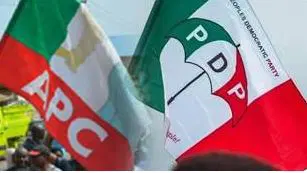
The Peoples Democratic Party (PDP) is facing one of the most critical periods in its history, as deep internal divisions, widespread defections, and external political pressures continue to weaken its structure and relevance in Nigeria’s political landscape.
Once Nigeria’s dominant ruling party for 16 years, the PDP is now grappling with an identity crisis, struggling to function effectively as an opposition force since losing power in 2015 to the All Progressives Congress (APC). Analysts say the party’s inability to adapt to opposition politics has exposed longstanding structural and ideological weaknesses.
Internal Crisis and Defections
The PDP’s challenges are compounded by internal disagreements among key stakeholders, including governors and legislators. Several prominent members have defected to the ruling APC, raising concerns about loyalty and the party’s capacity to maintain a united front.
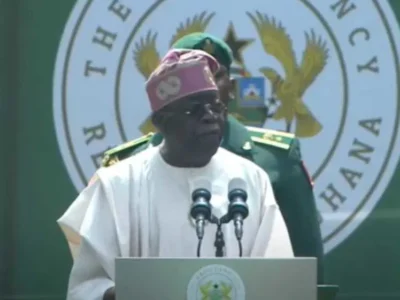
Controversy has also surrounded the role of the Minister of the Federal Capital Territory, Nyesom Wike, who remains a member of the PDP while maintaining close ties with the ruling government led by President Bola Tinubu. His position has sparked debate within the party, with some leaders accusing him of undermining PDP’s cohesion ahead of future elections.
Historical Roots of Structural Weakness
Political observers argue that the PDP’s current predicament is rooted in its formation and evolution. Established in the late 1990s during Nigeria’s transition to civilian rule, the party has often been described as lacking clear ideological foundations, functioning instead as a coalition of political interests.
Accounts from figures such as Ibrahim Babangida and Alex Ekwueme have suggested that military influence played a significant role in shaping the party’s early direction, including the emergence of Olusegun Obasanjo as its presidential candidate in 1999.
Critics say this origin contributed to a culture of centralized control and weak internal democracy, issues that persisted through successive administrations.
Failure to Consolidate as Opposition
Since its electoral defeat in 2015, the PDP has struggled to reposition itself. Unlike political systems in countries such as the United Kingdom or the United States—where parties routinely alternate power—the Nigerian political environment has been marked by frequent defections and weak party loyalty.
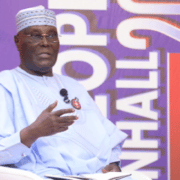
In 2023, internal divisions again affected the party’s performance, with the PDP presidential candidate Atiku Abubakar losing to Tinubu amid a fractured opposition base. Observers note that similar internal conflicts contributed to the party’s earlier defeat in 2015 against former President Muhammadu Buhari.
Implications for Nigeria’s Democracy
Experts warn that the weakening of the PDP has broader implications for Nigeria’s democratic system. A strong opposition is widely considered essential for accountability, policy debate, and electoral competitiveness.
While institutions such as the Independent National Electoral Commission (INEC) and the judiciary play critical roles in maintaining democratic processes, concerns have been raised in some quarters about their perceived neutrality in ongoing political developments.
Outlook Ahead of Future Elections
As Nigeria approaches another election cycle, the PDP’s survival may depend on its ability to resolve internal conflicts, rebuild party discipline, and present a credible alternative to the ruling APC.
Political analysts suggest that without significant reform and unity, the party risks further decline, potentially reshaping Nigeria’s opposition landscape for years to come.










Comments