

Nigeria’s Minister of Finance and Coordinating Minister of the Economy, Mr. Wale Edun, has raised alarm that nearly half of the world’s low-income countries are either already in debt distress or approaching it, calling for urgent global reforms to avert deeper economic instability.
Edun made the disclosure on Thursday at the ongoing Technical Group Meeting of the Group of 24 (G-24) nations in Abuja, where policymakers from developing countries gathered to deliberate on pressing financial and macroeconomic challenges.
Although he did not specifically state Nigeria’s position within that category, data from the World Bank classifies Nigeria as a lower-middle-income country for 2024–2026, rather than a low-income nation.
Despite this classification, Nigeria’s public debt has continued to rise steadily since 2023, with estimates placing total debt at about $100 billion—an all-time high. Meanwhile, the country’s debt service-to-revenue ratio is projected at 47 percent in 2025, underscoring mounting fiscal pressure.
Debt Burden Weighing on Global South
Edun noted that debt servicing has become a heavy burden for countries across the Global South, stressing that total annual debt service payments by developing nations now exceed inflows from both Overseas Development Assistance (ODA) and Foreign Direct Investment (FDI) from advanced economies.
“The gathering was an opportunity to reshape the development trajectory of the Global South at a time when global risks are converging faster than institutions can respond,” Edun stated.
He further revealed that about 25 percent of Emerging and Developing Economies (EMDEs) have lost access to international capital markets, making domestic revenue mobilization more critical than ever.
Cardoso Flags Costly Cross-Border Payments
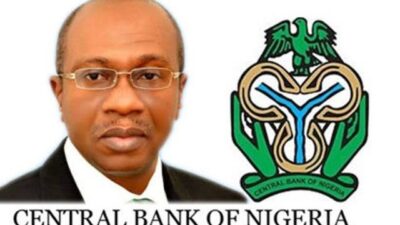
Also speaking at the meeting, the Governor of the Central Bank of Nigeria, Mr. Olayemi Cardoso, described cross-border payment systems among G-24 member states as inefficient, expensive, and exclusionary.
According to Cardoso, remittance corridors currently cost over six percent globally, with settlement delays stretching several days and regulatory compliance requirements shutting out many Micro, Small, and Medium Enterprises (MSMEs).
“Today, cross-border payments remain too slow, too costly, and too fragmented, especially for developing economies,” he said. “Millions remain disconnected from global opportunity.”
He emphasized the need for accelerated digital transformation to streamline international transactions, lower costs, and enhance financial inclusion.
Cardoso explained that improving cross-border payments is not merely a technical reform but a macroeconomic and development imperative. He added that payment systems now form a critical component of global financial stability.
The CBN governor also commended Edun, who currently chairs the G-24, for articulating a vision centered on modernizing global finance, strengthening domestic economic capacity, and ensuring digital innovation drives shared prosperity.
Constrained Fiscal Space
Earlier, Dr. Iyabo Masha, Director and Head of the G-24 Secretariat, said member countries face constrained fiscal space amid rising global uncertainty, policy fragmentation, and structural economic shifts.
“We meet at a moment of measured resilience but constrained ambition in the global economy,” she said. “For many EMDEs, the challenge is no longer simply to recover, but to restore development trajectories, protect macroeconomic stability, and finance transformation in a world of higher volatility.”
The meeting continues with discussions focused on debt sustainability, digital financial systems, and strengthening economic resilience across developing nations.












Comments