

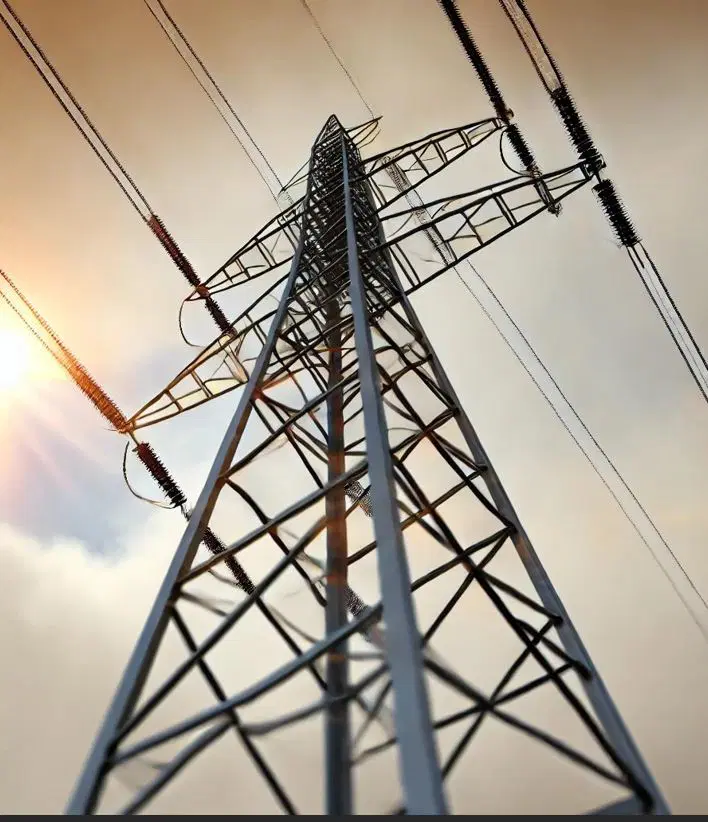
The Managing Director and Chief Executive Officer of the Nigerian Independent System Operator (NISO), Abdu Bello, has disclosed that Nigeria’s power sector has been losing between ₦5bn and ₦8bn monthly due to transmission inefficiencies, even as targeted reforms begin to reduce losses and stabilise the national grid.
Bello made this known on Wednesday at NISO’s first anniversary celebration held at its headquarters in Utako, Abuja, where he presented a comprehensive scorecard of reforms and operational milestones since the agency’s establishment.
NISO was created on April 30, 2024, by the Nigerian Electricity Regulatory Commission following the unbundling of the Transmission Company of Nigeria under the Electricity Act, 2023.
Addressing one of the sector’s most critical challenges, Bello revealed that transmission losses at inception were alarmingly high, reaching nearly 10 per cent and translating into billions of naira in monthly losses.
“One of the greatest problems we encountered at the inception of NISO is that we recorded a very high transmission loss factor. At some point, it was close to 10 per cent, costing about ₦5bn to ₦8bn monthly,” he said.
He, however, noted that ongoing interventions have begun to yield measurable results, with losses now reduced to about 7.05 per cent. “We are working to bring it further down to about five to six per cent in line with regulatory targets,” he added.
Bello described NISO’s first year as one focused on institutional development, system stabilisation, and market reforms aimed at repositioning Nigeria’s electricity sector.
“Today, we are not just celebrating one year of existence; we are reflecting on one year of deliberate effort, institutional progress, and measurable impact,” he stated.
He explained that NISO operates as an independent system operator responsible for system operations, market administration, planning, and enforcement of grid codes and market rules—functions critical to ensuring grid stability and market credibility.
On infrastructure, Bello highlighted ongoing efforts to digitise grid operations through the deployment of Supervisory Control and Data Acquisition/Energy Management Systems (SCADA/EMS), aimed at enabling real-time monitoring and control of the national grid.
“We are accelerating the implementation of SCADA EMS to enhance our ability to see, understand, and manage the grid in real time,” he said, adding that telemetry systems and Internet-of-Things-based metering infrastructure are also being deployed across generation, transmission, and distribution networks.
According to him, these upgrades will enable near real-time electricity market settlements and significantly improve operational efficiency.
Bello further disclosed that NISO is intensifying efforts to curb grid instability and recurring system collapses through stricter compliance enforcement and technical reforms, including the implementation of the free-governor mode of operation for generating units.
He added that plans are underway to introduce grid “islanding”—a strategy designed to segment the national grid to prevent widespread outages. “Disturbances in one segment will not cascade across the entire grid,” he explained.
On market operations, Bello said the agency has strengthened monitoring, enforced compliance with market rules, and enhanced coordination among stakeholders, including emerging state electricity markets.
He also linked recent fluctuations in power generation to gas supply constraints, stressing the need for improved synergy between the power and gas sectors.
In a major milestone, Bello announced that Nigeria successfully achieved trial synchronisation of its national grid with the West African Power Pool on November 8, 2025, opening new opportunities for regional electricity trade.
“This integration positions Nigeria to export excess power, earn foreign exchange, and strengthen domestic capacity,” he said.
The NISO chief expressed confidence that ongoing reforms will drive greater efficiency, transparency, and resilience in Nigeria’s electricity sector.















Comments