

Israel confirmed on Wednesday that its forces had killed Iran’s Intelligence Minister Esmail Khatib, following the targeted assassination of Iranian security chief Ali Larijani the previous day. Israeli Defence Minister Yoav Katz stated that the Israel Defense Forces (IDF) are now authorised to target any senior Iranian official without additional approval, signaling a new phase in Israel’s ongoing campaign against Tehran.
“Prime Minister Benjamin Netanyahu and I have authorised the IDF to eliminate any senior Iranian official for whom intelligence and operational confirmation exists,” Katz said. “We will continue to thwart and hunt them all down.”
Iran has yet to comment publicly on Khatib’s death. The announcement comes amid more than two weeks of regional hostilities triggered by US-Israeli strikes on Iran on February 28, which killed Supreme Leader Ayatollah Ali Khamenei. Israel has also targeted Akram al-Ajouri, head of the military wing of Palestinian Islamic Jihad, and vowed to pursue Iran’s new supreme leader, Mojtaba Khamenei, who has not appeared in public since succeeding his father.
Experts describe Israel’s strategy as “counter-regime warfare,” aiming to dismantle the Islamic Republic’s political and security structures, according to David Khalfa, co-founder of the Atlantic Middle East Forum. Larijani had been a key figure in Iran’s survival and regional strategy, often visible in public rallies, in contrast to the newly appointed Mojtaba Khamenei.
The conflict has already resulted in multiple casualties. Iranian missile strikes near Tel Aviv killed two people, while falling munitions hit central Israel, collapsing the roof of a residential building in Ramat Gan. Iran-backed Hezbollah retaliated by launching rockets at Israel, prompting strikes on central Beirut that Lebanese authorities say killed at least 12.
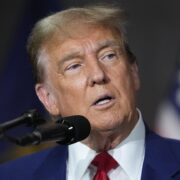
Meanwhile, US forces targeted Iranian missile sites along the Gulf coast to secure global shipping lanes through the Strait of Hormuz, a crucial route for a fifth of the world’s oil and LNG supplies. President Donald Trump expressed frustration that allied nations were not providing support to escort tankers through the strategic waterway, insisting that the US can act independently.
The violence has now spread across the region, affecting Iraq, Lebanon, and Gulf nations, with no clear end in sight to the escalating conflict.















Comments