

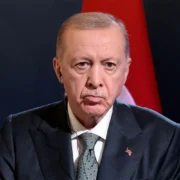
Turkish President Recep Tayyip Erdogan on Friday intensified his criticism of Israel, vowing that the country would face repercussions over what he described as widespread “killings” across the region.
Speaking in his Eid al-Fitr message to citizens, Erdogan condemned Israel’s actions, alleging that “hundreds of thousands of people” have been killed, and expressed confidence that accountability would follow. He also warned that the policies of Israeli Prime Minister Benjamin Netanyahu pose a serious threat to both regional and global peace.
Erdogan further voiced optimism that Muslim nations would overcome the current challenges facing the Middle East.
Meanwhile, Netanyahu defended Israel’s ongoing military operations, including coordinated actions with the United States targeting Iran. He stated that the strikes are aimed at safeguarding the Middle East and global security, while dismissing reports undermining the effectiveness of the campaign as misinformation.
According to Netanyahu, Israel has significantly weakened Iran’s missile and drone capabilities, with hundreds of launchers destroyed. He added that nuclear-related infrastructure, missile stockpiles, and production facilities remain under sustained attack.
The conflict has continued to widen, with Israel launching overnight strikes on targets in southern Syria. Israeli Defence Minister Israel Katz reiterated his country’s commitment to protecting Druze communities amid the ongoing clashes involving Iran and Hezbollah.
Tensions further escalated on Friday when Russia summoned Israel’s ambassador, Oded Joseph, following an اسرائیلی strike in southern Lebanon that injured a crew from RT. Moscow described the incident as a deliberate act and a violation of international law.
Commenting on the broader situation, Syrian President Ahmad al-Sharaa characterized the unfolding crisis as a rare and significant moment in modern history, comparable in scale to events not seen since World War II. He emphasized that Syria is carefully navigating the situation to avoid deeper involvement, while maintaining its focus on national development and reconstruction.













Comments