

A political scientist has warned that Nigeria’s democracy risks becoming increasingly skewed in favour of the wealthy following the House of Representatives’ decision to significantly raise campaign spending limits for elective offices.
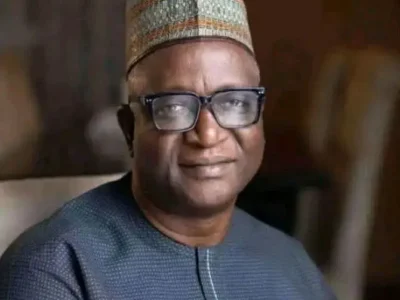
Speaking exclusively to DAILY POST, Professor Murtala Muhammad of Northwest University, Kano, said the new thresholds could transform elections into contests of financial strength rather than ideas, competence and public trust.
According to him, although the inclusion of real-time electronic transmission of election results is a commendable reform, it is overshadowed by what he described as a “dangerous recalibration” of campaign finance rules that could deepen inequality and weaken democratic accountability.
His comments followed the passage of the Electoral Act (Amendment) Bill 2025 by the House of Representatives after clause-by-clause consideration of a report by the House Committee on Electoral Matters, chaired by Adebayo Balogun.
Under the amended law, the maximum campaign spending limit for presidential candidates has been increased from ₦5 billion to ₦10 billion, while governorship candidates can now spend up to ₦3 billion, up from ₦1 billion.
Spending ceilings were also raised across other levels. Senatorial candidates can now spend ₦500 million, compared to the previous ₦100 million, while House of Representatives candidates are allowed ₦250 million, up from ₦70 million. For state constituencies, the limit was increased from ₦30 million to ₦100 million. Chairmanship candidates can now spend ₦60 million instead of ₦30 million, while councillorship candidates’ caps doubled from ₦5 million to ₦10 million.
The House also approved a provision limiting individual or corporate donations to a maximum of ₦500 million per candidate. In addition, it passed an amendment mandating the Independent National Electoral Commission (INEC) to transmit election results electronically in real time.
However, Professor Muhammad cautioned that higher spending limits could make wealth the primary gateway to political power in a country grappling with deep economic inequality.
“These new limits effectively shut the door on ordinary citizens, grassroots leaders, women and young people who lack access to massive financial resources,” he said. “Politics then becomes the preserve of the rich and their sponsors, rather than a platform for broad representation.”
He warned that the amendments could accelerate Nigeria’s drift from popular democracy to what he termed a “plutocracy,” where money determines who gets elected and who wields influence.
“When winning elections depends largely on money, accountability shifts from voters to financiers,” Professor Muhammad explained. “Elected officials begin to answer more to donors than to the people, and that weakens public trust in government.”
He also expressed concern that higher spending caps would encourage an “investment logic” in politics, where candidates view public office as a means to recoup campaign expenses.
“This mindset fuels corruption,” he said, noting that it could lead to inflated contracts, patronage, rent-seeking and misuse of public funds. “Public service becomes secondary to profit.”
While acknowledging the ₦500 million donation cap, Professor Muhammad argued that the overall scale of permitted spending still grants wealthy individuals and organised interests disproportionate influence over policy decisions, appointments and governance outcomes.
He further warned that excessive money in politics could undermine election integrity by promoting vote buying and transactional politics, particularly in areas where enforcement of campaign finance rules is weak.
“Instead of issue-based campaigns, voters are reduced to targets of financial inducement,” he said. “This erodes participation, trust and the credibility of election outcomes.”
According to him, the new regime also favours incumbents and established political parties with access to state resources and donor networks, making it more difficult for reform-minded candidates and emerging parties to compete.
Without strong transparency measures, effective enforcement and meaningful sanctions, Professor Muhammad warned that the amendments could weaken INEC, damage institutional credibility and ultimately undermine Nigeria’s democratic project.






Comments