

The Central Bank of Nigeria (CBN) has taken its reform narrative to the global investment community, projecting policy stability, macroeconomic discipline and renewed confidence as it seeks to attract sustained capital inflows into the Nigerian economy.
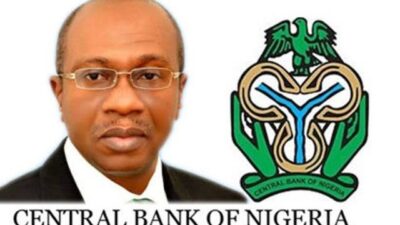
Under the leadership of Governor Olayemi Cardoso, the apex bank is intensifying efforts to reposition Africa’s largest economy for long-term stability and growth, anchored on transparent markets, rules-based management and difficult but necessary reforms.
At a high-level engagement in Washington, D.C., Cardoso reassured international investors of Nigeria’s commitment to predictable policy direction and macroeconomic stability, stressing that improved investor confidence remains critical to strengthening capital inflows, stabilising the exchange rate and rebuilding foreign reserves.
The engagement took place at the US–Nigeria Executive Business Roundtable, convened by the US Chamber of Commerce’s US-Africa Business Centre, and brought together senior US corporate executives, institutional investors and policymakers at a crucial stage of Nigeria’s economic reset.
Addressing participants, Cardoso presented a reform-driven narrative of Nigeria’s economy, emphasising institutional credibility, transparency and discipline. He said sustainable growth could only be achieved through consistency and credibility, noting that Nigeria’s reforms are designed to rebuild trust and provide clarity for investors operating in an increasingly volatile global environment.
According to the CBN, Cardoso highlighted foreign exchange reforms as central to improving transparency and price discovery, while the adoption of orthodox monetary policy is helping to anchor expectations and manage macroeconomic risks. He also pointed to the modernisation of Nigeria’s payment systems as a key part of the country’s investment appeal, describing efficient and secure payment infrastructure as essential for business expansion, innovation and financial inclusion.
Discussions at the roundtable focused on Nigeria’s macroeconomic stabilisation efforts, regulatory clarity and opportunities to scale bankable projects across priority sectors such as infrastructure, energy, financial services, agriculture and technology. Investor concerns around policy consistency and the broader investment climate were also addressed.
President of the US-Africa Business Centre, Ms Kendra Gaither, said global investors are increasingly drawn to markets that demonstrate discipline and credibility.
“What investors are responding to today is clarity, clear rules, credible reforms and seriousness of purpose. Nigeria’s message is increasingly one of discipline and opportunity, and that matters in a global economy seeking stability and predictability,” she said.
Reforms gain traction
The CBN’s outreach comes amid a series of far-reaching reforms launched since 2023, including the liberalisation of the foreign exchange market, the end to central bank financing of fiscal deficits and fuel subsidy reforms. These measures have been complemented by efforts to strengthen revenue collection and curb inflation.
Since the reforms began, Nigeria’s external reserves have grown, access to foreign exchange through official channels has improved and the country has returned to the international capital markets. Rating agencies have also upgraded Nigeria’s outlook, while a new privately owned refinery has strengthened the country’s position in a fully deregulated downstream oil market.
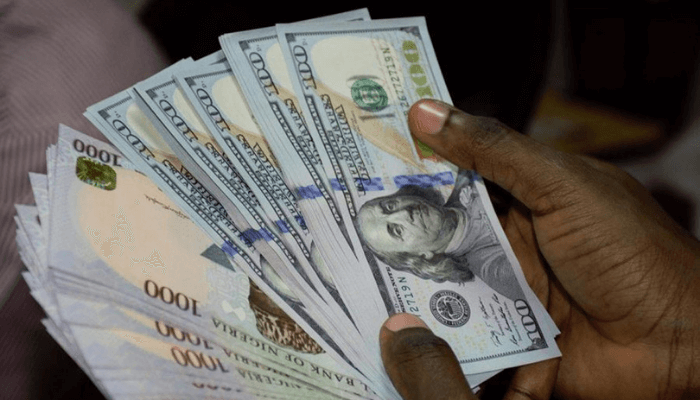
The unification of exchange rates and the clearance of over $7 billion in foreign exchange backlogs have further improved Nigeria’s investment outlook, with multilateral institutions describing the measures as bold steps toward long-term sustainability. Nigeria’s sovereign risk spread has also declined to its lowest level since January 2020.
As part of efforts to tame inflation and strengthen policy coordination, the CBN recently hosted the Monetary Policy Forum 2025, themed “Managing the Disinflation Process.” The forum brought together fiscal authorities, lawmakers, private sector leaders, development partners and academics to enhance policy dialogue and coordination.
At the forum, Cardoso reaffirmed the bank’s focus on price stability and a planned transition to an inflation-targeting framework, noting that managing disinflation requires strong coordination between fiscal and monetary authorities.
The apex bank has also introduced new minimum capital requirements for banks, effective March 2026, aimed at strengthening the financial system and positioning the sector to support Nigeria’s ambition of building a $1 trillion economy.
Investor appetite returns
Signs of renewed investor confidence were evident in Nigeria’s recent $2.25 billion dual-tranche Eurobond issuance, which recorded the largest order book in the country’s history. The bonds, maturing in 2036 and 2046, attracted orders exceeding $13 billion from investors across the UK, North America, Europe, Asia and the Middle East.
The 10-year bond was priced at a coupon of 8.63 per cent, while the 20-year note carried a coupon of 9.13 per cent. According to the Debt Management Office, the strong demand reflects growing confidence in Nigeria’s macroeconomic management and reform trajectory.
Minister of Finance and Coordinating Minister of the Economy, Wale Edun, said the successful issuance demonstrated global confidence in Nigeria’s outlook, while DMO Director-General, Patience Oniha, described it as a major milestone in diversifying funding sources and supporting the country’s growth agenda.
Market analysts say Nigeria is regaining momentum as reforms begin to take hold. Improved currency liquidity, better profit repatriation and moderating naira volatility have supported portfolio inflows, while Nigeria’s local market is increasingly viewed as less correlated with global risk conditions than some emerging market peers.
Following the Eurobond issuance, the naira appreciated and external reserves climbed to a seven-year high of $46.07 billion, signalling improved market confidence. Analysts caution, however, that sustaining the gains will depend on continued policy discipline, currency stability and careful management of foreign currency debt exposure.
Despite the challenges, the CBN’s global investor push underscores a clear message: Nigeria is betting on credibility, discipline and reform consistency to secure long-term capital and drive sustainable economic growth.
















Comments