

Nigeria’s main opposition party, the Peoples Democratic Party (PDP), is facing one of the most consequential moments in its history after a ruling by the Court of Appeal (Nigeria) nullified its last national convention, throwing the party’s leadership structure into uncertainty and leaving its political survival increasingly dependent on just two governors.
The judgment effectively cancelled the convention held in Ibadan last year that produced a National Working Committee aligned with former minister Kabiru Tanimu Turaki. With the convention voided, the leadership that emerged from it has lost legal standing.
At present, the only national leadership structure recognised by the Independent National Electoral Commission (INEC) is the caretaker committee headed by Abdulrahman Mohammed as chairman and Samuel Anyanwu as secretary, a structure widely believed to be politically aligned with Federal Capital Territory Minister Nyesom Wike.
The ruling has dramatically altered the internal balance of power within the party, handing effective control of the recognised structure to a faction that had earlier lost the internal contest for dominance.
A senior party figure familiar with the development said the implications are clear.
“Politics is about structure. Right now, the structure is not on their side,” the source said.
PDP’s Last Two Governors
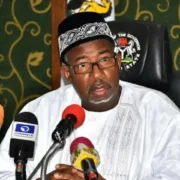
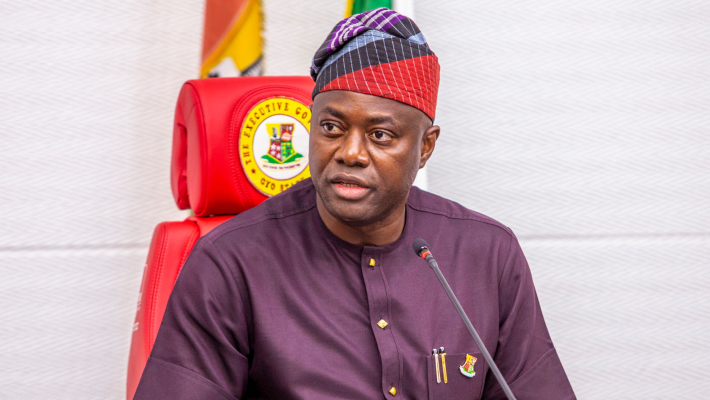
The crisis has placed unusual political weight on two remaining PDP governors: Seyi Makinde of Oyo State and Bala Mohammed of Bauchi State.
Once Nigeria’s dominant political force, the PDP governed the country for sixteen years and controlled more than a dozen states before losing power in 2015. Today, Makinde and Mohammed are the party’s only serving governors.
Both are serving their final terms and are expected to play influential roles in determining who succeeds them in their states in 2027. However, the uncertainty surrounding the party’s national leadership could complicate those plans.
Under Nigeria’s electoral framework, political parties must submit candidate nominations to INEC through their recognised national leadership. If the legitimacy of that leadership is disputed, candidate nominations may become vulnerable to legal challenges.
A party insider involved in recent consultations said the governors are closely monitoring the situation.
“Both understand that whoever controls the national structure ultimately signs the candidate lists. Without influence at that level, their leverage heading into 2027 becomes very limited,” the source said.
Debate Over Supreme Court Appeal
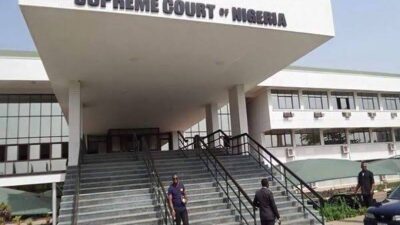
One option being considered by supporters of the Turaki-aligned faction is to challenge the ruling at the Supreme Court of Nigeria.
However, political leaders warn that a prolonged legal battle could leave the party racing against the electoral timetable.
Former Senate President Abubakar Bukola Saraki cautioned that waiting for a final Supreme Court decision may undermine the party’s preparations for upcoming elections.
“My own position is that the Court of Appeal has ruled. However, with the revised timetable by INEC, it is obvious that there is no time to wait for the Supreme Court decision,” Saraki said.
“Otherwise, we would not meet the deadlines for completing the process of nominating candidates, and uncertainty will continue to hang over the validity of tickets issued on the PDP platform.”
Saraki instead urged party leaders to prioritise reconciliation and organise a fresh convention that complies with electoral rules.
Calls for Unity
Similar appeals have come from other party leaders.
Kogi Central senator Natasha Akpoti-Uduaghan called on members to shift focus away from litigation and towards rebuilding the party.
“The Court of Appeal has spoken, and as a democratic party that believes in the rule of law, we must shift focus from litigation to reconciliation and rebuilding,” she said.
“Our members across the grassroots must not become casualties of prolonged disagreements among leaders.”
However, reconciliation could also require accepting the authority of the Mohammed/Anyanwu-led caretaker structure—an outcome that could further strengthen the political influence of the Wike camp.
Election lawyer Nnamdi Ezeobi said leadership disputes often create legal vulnerabilities for political parties.
“Under Nigeria’s electoral framework, candidates are submitted through a party’s recognised national leadership. If that structure is being contested through court rulings, it can expose those nominations to legal challenges later,” he explained.
Speculation Over Possible Defections
In the aftermath of the ruling, political speculation has intensified about possible defections.
Observers suggest that Bala Mohammed could consider moving to the ruling All Progressives Congress (APC), while Makinde has occasionally been mentioned in discussions involving the African Democratic Congress (ADC).
If either governor eventually leaves, the consequences for the PDP could be severe. The party would lose its remaining state governments, further weakening its national political standing.
The Dispute That Sparked the Crisis
Ironically, the dispute that contributed to the legal battle did not originate within the Wike faction.
Former Jigawa State governor Sule Lamido had earlier protested what he described as attempts to restrict access to nomination forms ahead of the Ibadan convention.
Lamido argued that internal democracy required open competition and publicly demanded the forms himself. The dispute eventually became part of the legal process that culminated in the convention being nullified.
What began as an argument over internal party procedures has now reshaped the PDP’s leadership structure.
A Political Advantage for the Ruling Party
Political analysts say the broader implications could extend beyond the PDP.
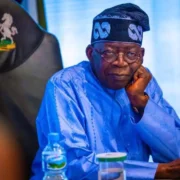
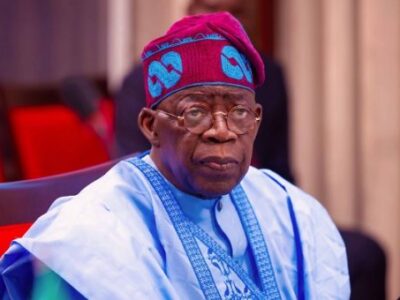
If the opposition remains consumed by internal disputes and legal battles, the biggest beneficiary could be President Bola Ahmed Tinubu and the ruling APC as the country moves closer to the next election cycle.
Without stable leadership or strong state structures, the party that once posed the most formidable national challenge may enter the 2027 elections significantly weakened.
For now, the PDP’s immediate future appears tied to the decisions of Makinde and Mohammed.
Whether they remain within the party and attempt to rebuild it—or chart new political paths elsewhere—could determine whether the PDP survives as a viable national opposition force.








Comments