

Political tensions are mounting across Nigeria ahead of the 2027 general elections following a series of reported attacks on opposition candidates, their supporters and, most recently, President Bola Ahmed Tinubu.
The growing incidents of political violence have raised concerns about the safety of political actors and the credibility of the electoral process, with fears that the situation could deteriorate if urgent measures are not taken.
Among those reportedly affected are supporters of Peter Obi of the Nigeria Democratic Congress (NDC), Atiku Abubakar of the African Democratic Congress (ADC) and Omoyele Sowore of the African Action Congress (AAC).
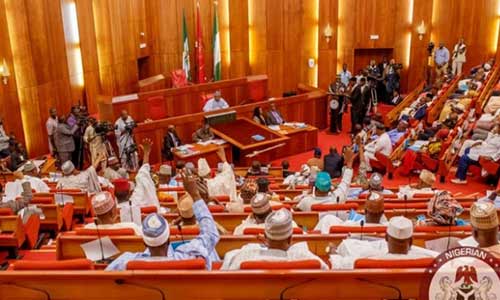
The reported attack on President Tinubu’s convoy in Abuja on November 13 has also intensified concerns, prompting the Senate to direct security agencies to investigate attacks involving the President and other political leaders.
The upper chamber further mandated its Committees on National Security and Intelligence, Public Affairs, and the Independent National Electoral Commission (INEC) to engage relevant institutions and submit a report within one week on measures to prevent political violence and protect the forthcoming elections.
The resolutions followed the adoption of a motion of urgent public importance sponsored by Senator Abdul Ningi on November 16, highlighting what lawmakers described as an alarming increase in attacks on political leaders, supporters and campaign activities across the country.
The Senate called on the Federal Government to direct the Inspector-General of Police and other security agencies to strengthen protection for political candidates, supporters and political gatherings nationwide.
It also advocated effective early-warning and rapid-response mechanisms to prevent further violence as political activities intensify ahead of the 2027 elections.
Reported attacks on political leaders
In the motion, lawmakers expressed concern over the reported attack on Tinubu’s motorcade on November 13, shortly after the President observed Jumat prayers at the Shehu Shagari Central Mosque in Garki, Abuja.
The convoy was reportedly attacked with stones and other potentially dangerous objects as it departed the mosque, resulting in damage to vehicles and injuries to security personnel.
The Senate also recalled reported attacks on Peter Obi and other political stakeholders in Benue State, as well as the disruption of a political procession involving NDC and Obidient Movement supporters in Asaba, Delta State, on November 7.
The Asaba incident reportedly left one person dead and five others injured.
Lawmakers further referenced the reported attack on Atiku Abubakar’s convoy in Sokoto State, describing the incidents as evidence of growing political intolerance and intimidation.
According to the Senate, such developments could undermine public confidence in the electoral process and discourage citizens from participating in democratic activities.
Senators condemn political violence
Contributing to the debate, Senator Mohammed Ndume called on the National Assembly to take a firm position against political violence, warning that attacks could eventually extend to other political leaders and lawmakers if left unchecked.
“What we need to do as a Senate is to stand up solely against any form of violence,” he said.
Ndume described the reported attack on Tinubu as an embarrassment to the country rather than to the President.
“What happened last Friday to Mr President is not an embarrassment to him, it is an embarrassment to Nigerians,” he stated.
He questioned the justification for attacking political leaders because of their political positions, adding that Tinubu’s response demonstrated his commitment to democratic principles.
The senator also called on the police to prohibit the carrying of potentially dangerous objects, including knives and sticks, at political rallies.
He advocated the immediate prosecution of anyone found responsible for electoral violence, suggesting the use of mobile courts to ensure speedy trials.
Senator Samaila Kawu also condemned the attacks but accused some politicians of sponsoring violence by allegedly supplying weapons and drugs to young people.
“We are the sponsors of all what is going on,” he said.
Kawu argued that addressing political violence required holding not only the perpetrators accountable but also those financing and encouraging them.
However, he cautioned security agencies against excessive force, citing an alleged incident during an APC rally in Sokoto where security operatives reportedly shot at supporters wearing party insignia.
The Senate Minority Leader, Senator Abba Moro, warned that continued political violence could disenfranchise voters and called on security agencies to ensure that political activities were conducted peacefully.
Similarly, Senator Babangida Hussaini recalled the recommendations of the Justice Mohammed Uwais-led Electoral Reform Committee, which proposed specialised institutions and courts to address electoral violence.
He regretted that several recommendations aimed at tackling the problem had not been fully implemented.
“We have begun to see the results of what we have not done,” Hussaini said.
Senator Sampson Ekong, in his contribution, called for a level playing field for all political parties and urged the Federal Ministry of Information and the National Orientation Agency to intensify public enlightenment campaigns against electoral violence.
Akpabio warns perpetrators of electoral violence
In his closing remarks, Senate President Godswill Akpabio called for the full implementation of the 2026 Electoral Act, particularly provisions dealing with electoral violence.
He drew attention to Sections 121 to 128 of the Act, which he said prescribed sanctions for candidates whose agents incite violence.
According to Akpabio, candidates whose agents are found to have incited violence could face disqualification where INEC establishes a prima facie case against them.
He also warned candidates against carrying weapons or encouraging armed thugs to accompany them during political activities.
Earlier, the Senate President had urged parents and guardians to caution their children against participating in attacks on political leaders, warning that some actions could attract serious criminal consequences, including charges of treasonable felony.
He said those implicated in the reported attack on Tinubu could have faced severe consequences if security operatives had responded differently.
The Senate subsequently directed its three committees to engage relevant security and electoral institutions and report back within one week.
Nigerians question Senate’s intervention
Despite the Senate’s intervention, reactions from Nigerians have been mixed, with some commending the lawmakers for addressing the growing insecurity surrounding political activities, while others have described the move as belated.
Some critics have questioned why the Senate did not take a similarly strong position when opposition candidates and their supporters were reportedly attacked before the incident involving the President.
Public affairs analyst Dele Omotunde suggested that the attack on Tinubu and the growing popularity of the slogan “Tinubu Must Go” may have influenced the lawmakers’ decision to speak out.
Questioning the timing of the Senate’s intervention, Omotunde wondered whether the lawmakers would have expressed similar concerns if the President had not been attacked in Abuja.
He alleged that supporters of opposition parties had suffered attacks allegedly involving ruling-party supporters without sufficient condemnation from political authorities.
Omotunde also cautioned opposition parties against becoming complacent, arguing that the Senate’s intervention should not be interpreted as a guarantee that political violence would stop.
He advised opposition politicians to remain vigilant and prioritise their security as the election approaches.
NDC raises concerns over alleged selective condemnation
A chieftain of the Nigeria Democratic Congress also criticised what he described as the Senate’s delayed response to attacks involving opposition politicians and their supporters.
According to him, the incidents began with reported attacks on NDC supporters in Edo State, where Peter Obi allegedly narrowly escaped an assassination attempt.
He further referenced reported attacks on NDC supporters in Warri, Delta State, and the assault on Obi and his supporters in Benue State during a visit to victims of the Yelwata attack.
The party chieftain also mentioned an alleged attack on the convoy of Obi and former Kano State Governor Rabiu Musa Kwankwaso in Calabar, Cross River State.
He cited additional incidents in Enugu and Asaba, where political activities involving NDC supporters reportedly resulted in casualties, including the death of one person.
The NDC chieftain also alleged that Atiku Abubakar and his supporters encountered attacks and intimidation in Sokoto and Kebbi states while participating in ADC campaign activities.
He questioned why the Senate had not previously issued a similar condemnation of the reported incidents involving opposition politicians.
According to him, the lawmakers only became vocal after the President himself was affected.
Fears of escalating political crisis
Meanwhile, concerns are growing among political observers that the apparent rise in attacks, intimidation and hostile political rhetoric could threaten Nigeria’s democratic stability if not properly addressed.
Some observers believe the government’s perceived silence over earlier incidents may have emboldened perpetrators, although the allegations require investigation and accountability through the appropriate authorities.
With political activities expected to intensify ahead










Comments