

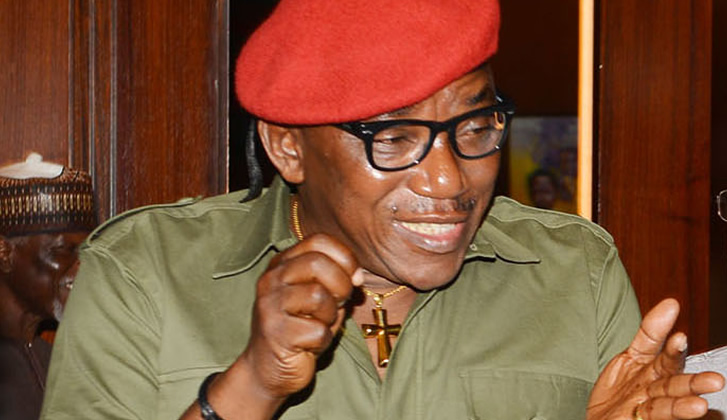
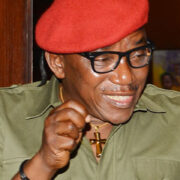
Former Minister of Youth and Sports Development, Barr. Solomon Dalung, has accused the administration of President Bola Tinubu of lacking the political will to tackle Nigeria’s worsening security crisis, alleging that the government is more concerned with preparations for the 2027 general elections than protecting citizens from terrorists and kidnappers.
Speaking on Arise Television’s Morning Show on Friday, Dalung delivered a scathing assessment of the Tinubu administration’s performance over the past three years, criticizing its handling of insecurity, economic challenges, and governance.
According to the former minister, the government possesses the technological capacity to monitor and apprehend critics but has failed to deploy similar resources against terrorists operating across the country.
“Government seems not to have the political will to deal with insecurity. They have all the gadgets to track anybody who criticises the government and arrest him within minutes, but they cannot track terrorists who openly communicate from the forests, abduct schoolchildren, and release videos of their activities,” Dalung said.
He also condemned a recent appeal by the Minister of Information urging Nigerians to unite against terrorism, describing the statement as an admission of failure rather than a demonstration of leadership.
“I think it is a statement confirming that the federal government has completely and woefully failed. They do not appear to have any clear solution to the insecurity ravaging the country,” he added.
Dalung identified the absence of political will and poor coordination among security agencies as major obstacles in the fight against terrorism. He argued that intelligence agencies and security institutions often operate independently, competing for presidential attention instead of sharing intelligence and working collaboratively.
The former minister further warned that terrorist groups have established what he described as a “parallel forest economy,” enabling them to sustain their operations outside the reach of government authority.
Questioning the effectiveness of international assistance, Dalung noted that despite reports of American military support in Nigeria, many citizens have yet to witness any tangible impact.
“We were told that the Americans are here with us. If the Americans are here, what have they been doing? We have not felt their impact,” he said, while urging the government to empower local communities to play a greater role in securing their areas.
Looking ahead to the 2027 elections, Dalung expressed concern over what he described as a return to the regional politics of Nigeria’s First Republic, noting that virtually every geopolitical zone now appears to be positioning its own presidential candidate.
“Nigeria has returned to the politics of the First Republic, where regions now have their political parties. Almost all the zones have presidential candidates. We may be heading toward serious political confusion as we approach the 2027 elections,” he warned.
He also painted a bleak picture of the nation’s economic situation, arguing that despite repeated references to economic reforms, ordinary Nigerians have seen little benefit.
“Three years into this administration, it has been largely a blame game and rhetoric about reforms. No meaningful benefit has trickled down to the people. Nigerians are becoming poorer by the day, the economy remains weak, and insecurity continues to dominate national discourse,” Dalung stated.
However, political scientist Obafemi George offered a contrasting perspective, defending the Tinubu administration and arguing that the government deserves more time to implement its reforms.
George cited Nigeria’s recent sovereign credit rating upgrade by Standard & Poor’s from B- to B as evidence of improving economic stability. He also attributed the worsening security situation partly to the withdrawal of French military forces from the Sahel region, which he said created opportunities for terrorist groups to expand their influence.
“This administration inherited and confronted a more complex security environment than its predecessor. It has invested more resources in security and recorded significant successes, including several rescue operations carried out in recent months,” George said.
Assessing the administration’s overall performance, George maintained that President Tinubu has made measurable progress across key sectors, including the economy, infrastructure, education, healthcare, and security.
“When evaluating any president, there are key performance indicators such as the economy, infrastructure, education, healthcare, and security. In my opinion, President Tinubu has made significant progress in these areas,” he said.
George argued that meaningful national transformation requires patience, drawing comparisons with countries such as China, Rwanda, and the United Arab Emirates, whose development journeys took decades rather than years.
“Nation-building is not an overnight process. The reforms being implemented today are laying the foundation for future prosperity. Some of the painful decisions being taken now are necessary because previous administrations failed to address them when they should have,” he said.
The exchange reflects the growing national debate over the Tinubu administration’s record as it approaches the midpoint of its first term, with supporters pointing to long-term reforms and critics highlighting the immediate challenges of insecurity and economic hardship facing Nigerians.






Comments