

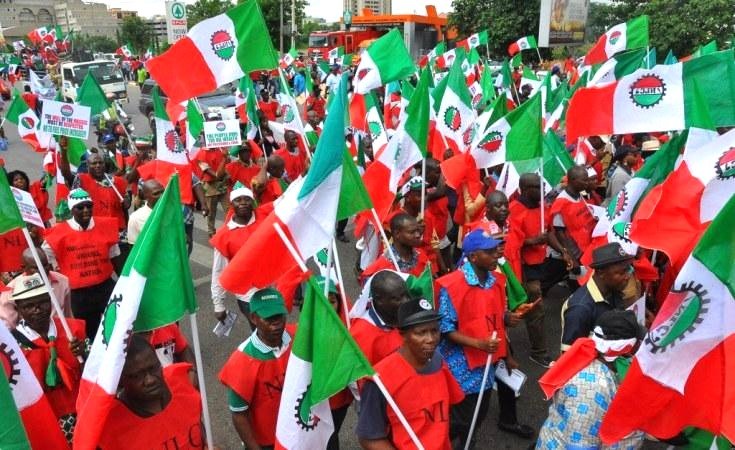
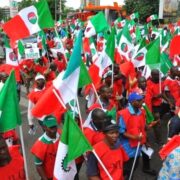
The Nigeria Labour Congress (NLC) has warned that worsening insecurity, rising poverty, and economic instability are pushing Nigerian workers and citizens to the edge, describing the situation as a national crisis that is now threatening livelihoods and productivity across the country.
NLC President, Joe Ajaero, said in a recent interview that survival has become the primary concern for many Nigerians, as insecurity continues to disrupt economic activity, displace communities, and discourage investment.
According to him, the impact of insecurity has gone beyond personal safety to affect employment, agriculture, and business operations, particularly in rural areas where many workers depend on farming for survival.
“Everyone in this country will tell you that insecurity has finished the country… Workers cannot operate in those areas. The psychological fear of movement is increasing, and people are being displaced into IDP camps,” Ajaero said.
He noted that the crisis has also worsened unemployment and poverty, as both local and diaspora investors increasingly avoid the country due to safety concerns. Farmers, he added, are unable to access their lands, further threatening food security and rural livelihoods.
Ajaero also criticised the disconnect between macroeconomic indicators and the lived reality of ordinary Nigerians, arguing that reported economic growth has not translated into improved living standards.
“If the economy has grown and people cannot afford transportation or basic needs, then what exactly has improved?” he asked.
He further pointed to the sharp rise in fuel prices following global tensions, noting that Nigerians continue to bear the burden without corresponding wage adjustments or social protection.
The labour leader also raised concerns over multiple taxation, saying workers and informal sector operators face increasing levies even before starting daily economic activities.
On government alternatives to fuel subsidies, Ajaero expressed disappointment over the slow rollout of Compressed Natural Gas (CNG) and electric vehicle infrastructure, saying many citizens still lack viable transport alternatives amid high fuel costs.
He also described poor wages and economic hardship as a violation of basic human rights, arguing that starvation and inability to afford necessities undermine dignity and welfare.
Meanwhile, the NLC has faulted the position of the Minister of Finance and Coordinating Minister of the Economy, Taiwo Oyedele, who maintained that the Federal Government would not reinstate fuel subsidy despite rising living costs.
Speaking to international investors in France during President Bola Tinubu’s state visit, Oyedele said subsidy removal was necessary to eliminate economic distortions, adding that the government would not return to price control mechanisms.
“We will not bring back fuel subsidy because it creates distortions for the economy,” he said, insisting that market forces should determine fuel pricing.
He also pointed to Nigeria’s reported economic growth in 2025 and reiterated government ambitions to build a $1 trillion economy by 2030.
However, an NLC official who spoke anonymously dismissed the government’s stance as disconnected from current realities, arguing that other countries are adopting targeted interventions to cushion global energy shocks.
The official called for more flexible policy options, including temporary tax relief on essential goods, strategic subsidies for key sectors such as transport and manufacturing, and increased domestic crude allocation to local refineries to stabilise fuel supply.
He warned that a rigid rejection of all subsidy-related interventions without alternatives could further deepen economic hardship for citizens.
The debate comes against the backdrop of rising inflation, which surged sharply following the removal of fuel subsidy in May 2023, with transportation, food, and energy costs driving significant increases in the cost of living across the country.




Comments