

Abuja, Nigeria – February 11, 2026 – The Independent National Electoral Commission (INEC) and the National Peace Committee (NPC) have reaffirmed their commitment to deepening collaboration on election security and conflict prevention ahead of the forthcoming Federal Capital Territory (FCT) Area Council election.
The renewed partnership was underscored on Wednesday at INEC’s headquarters in Abuja when members of the National Peace Committee paid a courtesy visit to the Commission’s Chairman, Prof. Joash Amupitan, SAN. He received the delegation alongside National Commissioners, senior technical aides and top management staff.
Describing the visit as timely, Prof. Amupitan noted that the Commission had recently concluded a series of engagements with key stakeholders—including security agencies, political parties, civil society organisations and the media—as part of final preparations for the FCT poll.
He stressed that beyond the immediate election, 2026 represents a crucial preparatory period for the 2027 General Election.
“We regard 2026 as our preparatory year for the 2027 General Election,” the Chairman said. “The responsibility we share in maintaining peace and security during this period is paramount. With proactive and strategic partnership, we can create an environment conducive to safe and credible elections.”
Prof. Amupitan commended the National Peace Committee for establishing an Election Security Information (ESI) Hub to support institutional efforts in electoral risk mitigation. He disclosed that the Committee’s evidence-based security assessment of the FCT—particularly the identification of potential flashpoints in AMAC, Gwagwalada, Kuje and Bwari Area Councils—would be carefully reviewed and integrated into ongoing security coordination plans.
The INEC Chairman acknowledged concerns raised by the Committee, including alleged threats among political actors, intra- and inter-party tensions, risks of vote trading and broader security challenges in some communities. He assured the delegation that relevant intelligence would be shared with security agencies to enable preventive and responsive measures.
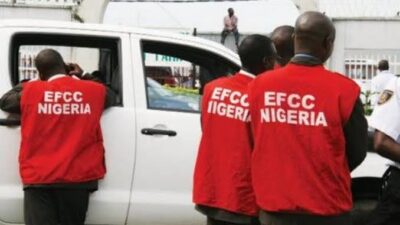
“Just last week, we charged the Nigeria Police Force, the EFCC and the ICPC to remain vigilant against vote buying and related offences,” he said, adding that the data presented would help strengthen the integrity of the electoral process.
While noting that certain security details must remain confidential, Prof. Amupitan expressed readiness to institutionalise structured information-sharing mechanisms with the Committee under appropriate safeguards. He also recalled the Committee’s role in facilitating peace accords ahead of previous elections, describing such interventions as social contracts reinforcing political actors’ commitment to non-violence and acceptance of outcomes.
Speaking earlier, the Executive Director of the Kukah Centre and Head of Secretariat of the National Peace Committee, Rev. Fr. Atta Barkindo, conveyed the goodwill of the Committee’s Chairman, former Head of State Gen. Abdulsalami Abubakar (rtd.), and its Convener, Bishop Hassan Kukah.
He reiterated the Committee’s readiness to provide strategic support not only for the FCT election but also for upcoming governorship elections in Ekiti and Osun States, as well as preparations for the 2027 General Election.
Rev. Fr. Barkindo revealed that the Committee’s Election Security Information Hub, launched last year, has built nationwide networks to gather and analyse data on insecurity, violence and conflict trends that could affect the electoral process. He emphasized that the Committee’s interventions are guided strictly by empirical evidence rather than partisan considerations.
In a detailed presentation, the Project Manager of the Kukah Centre, Ms. Asabe, described the FCT poll as a “mirror” for assessing national readiness ahead of 2027.
She explained that the ESI Hub has tracked incidents under two broad categories since June last year: election-related violence and electoral offences, monitored in line with constitutional provisions, the Electoral Act and the principles underpinning peace accords.
According to her findings, AMAC recorded a high concentration of reported security incidents and potential vote trading risks. Gwagwalada was flagged for indigene-settler tensions and party disputes, while Bwari faces concerns over candidate legitimacy disputes and security spillovers from neighbouring states.
Kuje, she noted, presents multifaceted challenges, including reported farmer-herder conflicts, kidnapping incidents, limited security presence in certain communities and telecommunications gaps in remote areas.
She expressed confidence that with coordinated action among stakeholders, the FCT Area Council election would be conducted peacefully and credibly, while calling for sustained collaboration between the Committee and INEC in sharing relevant monitoring insights.
The engagement underscores growing efforts by electoral and peacebuilding institutions to proactively address emerging risks as Nigeria prepares for a critical electoral cycle culminating in the 2027 General Election.
















Comments