

States across Nigeria earmarked a combined ₦525.23bn for security votes and related operations between 2023 and 2025, despite persistent killings, kidnappings and violent crimes that continue to leave citizens exposed and fearful.
The figure emerged from an analysis of approved state budget documents published on Open States, a BudgIT-backed platform that collates government budget data. The scale of the allocations has reignited national debate about the effectiveness, transparency and real impact of security votes, which are meant to strengthen internal security.
Although the constitutional responsibility for protecting lives and property rests primarily with the Federal Government, worsening insecurity has pushed many governors to adopt state-level security strategies, often funded through large, discretionary security votes. Yet, critics argue that these measures have failed to deliver tangible improvements, as criminal networks continue to operate with little restraint in many parts of the country.
The analysis covered 32 states. Gombe, Kebbi, Niger and Yobe were excluded because their budgets did not clearly disclose security vote figures. Ekiti also failed to clearly itemise its 2025 allocation, suggesting that the actual national total may be higher than ₦525.23bn.
A breakdown of the figures shows a steady and then sharp rise in spending. States approved ₦150.47bn in 2023, increased it to ₦164.07bn in 2024, and then sharply raised allocations to ₦210.68bn in 2025. This represents a year-on-year increase of about 9.04 per cent between 2023 and 2024, followed by a much steeper 28.4 per cent jump in 2025. Compared to 2023, security vote budgets in 2025 were more than ₦60bn higher, an increase of roughly 40 per cent within three years.
A small group of states accounted for a large share of the spending. Borno State topped the chart with a cumulative ₦57.40bn over the period, reflecting the ongoing cost of counterinsurgency operations in the North East. Anambra followed with ₦42.57bn, driven by a dramatic rise from ₦184.90m in 2023 to ₦17.28bn in 2024 and ₦25.10bn in 2025. Delta ranked third with ₦38.44bn, while Benue recorded ₦36.87bn, with its allocation rising consistently each year.
Other high-spending states included Ondo (₦31.72bn), Zamfara (₦31.40bn), Edo (₦29.21bn), Adamawa (₦27.00bn) and Bauchi (₦25.41bn).
At the other end of the spectrum, Rivers disclosed just ₦210m over the three years, Akwa Ibom reported ₦624m, and Ekiti only ₦3.1m, highlighting wide disparities in disclosure and prioritisation of security vote spending.
In 2023, Bauchi approved the highest security vote at ₦17.39bn, slightly ahead of Delta’s ₦17.15bn. Bayelsa followed with ₦11.12bn, while Adamawa and Benue allocated ₦9.95bn and ₦9.27bn respectively. Borno approved ₦8.92bn that year.
The pattern changed in 2024, when Zamfara emerged as the biggest spender with ₦17.40bn, followed by Anambra (₦17.28bn) and Borno (₦15.65bn). Edo and Benue also remained among the top spenders.
By 2025, allocations widened sharply. Borno approved ₦32.83bn, far ahead of other states. Anambra followed with ₦25.10bn, while Oyo recorded a striking jump to ₦20.09bn, up from ₦26.5m in 2023 and ₦5.46m in 2024. Benue approved ₦15.60bn, Ondo ₦11.50bn and Edo ₦11.35bn.
Several states recorded dramatic fluctuations over the period. Bauchi’s allocation fell from ₦17.39bn in 2023 to just ₦12.8m in 2024 before rebounding to ₦8bn in 2025. Kano dropped from ₦2.10bn in 2023 to ₦11.93m in 2024, then rose to ₦5.62bn in 2025. Ogun steadily increased its allocation from ₦114.70m in 2023 to ₦2.80bn by 2025.
Regionally, the North East accounted for the largest share of disclosed security vote spending, with ₦113.78bn from Adamawa, Bauchi, Borno and Taraba, excluding Gombe and Yobe. The South East followed with ₦102.59bn, driven largely by Anambra’s surge. The South South recorded ₦98.36bn, the North Central ₦76.57bn, and the North West ₦70.77bn. The South West had the lowest disclosed total at ₦63.16bn, although its spending spiked sharply in 2025 due to large allocations by Oyo and Ondo.
Security votes in Nigeria are special, often secretive allocations intended for intelligence gathering, emergency responses and other sensitive security operations. However, the lack of transparency surrounding their use has long drawn criticism, with analysts warning that the funds are frequently diverted for political purposes or personal enrichment.
The National Coordinator of the Coalition of Northern Groups, Jamilu Charanchi, questioned the value of the allocations, noting that insecurity, poverty and poor infrastructure persist despite the huge sums spent.
“What is a security vote, and what are they doing with it? We still have killings, bad roads, dilapidated hospitals and failing schools,” he said, arguing that poverty remains a major driver of insecurity.
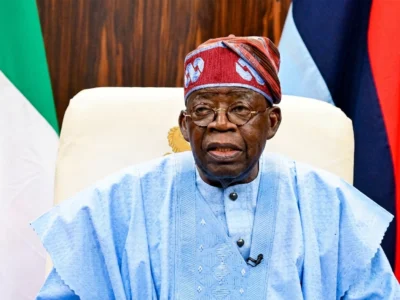
President Bola Tinubu has also weighed in, stressing that well-governed states and empowered local governments are crucial to addressing security challenges. He blamed the weakened state of local government administration for Nigeria’s inability to mount effective community-level responses, noting that local councils are closest to the people and best positioned to support community policing.
Organised labour has echoed these concerns. In December 2025, the Nigeria Labour Congress warned that worsening insecurity is draining household incomes and crippling economic activity. The Lagos State NLC Chairperson, Funmi Sessi, said states and local governments must take greater responsibility, while her deputy, Olapisi Ido, questioned how security allocations are being used as violence continues unchecked.
As security vote budgets continue to rise, critics say Nigerians are entitled to a simple answer: where is the money going, and why does safety remain elusive?
















Comments