

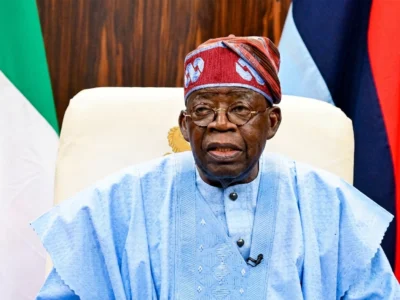
The Presidency has increased the 2026 Federal Government budget from N54.46 trillion to N58.18 trillion to accommodate a large-scale recruitment into the military, police, and other security agencies, President Bola Tinubu announced recently.
Director-General of the Budget Office, Mr. Tanimu Yakubu, revealed the new figure following a brief Federal Executive Council (FEC) meeting on Friday, just hours before President Tinubu presented the budget to the National Assembly.
A Presidency source explained that submissions from Ministries, Departments, and Agencies (MDAs) had been completed before the announcement of the expanded security recruitment. The budget increase was therefore necessary to cover the financial implications of the new intakes.
The FEC meeting lasted less than two hours and did not involve detailed discussions on the budget. Mr. Yakubu was subsequently instructed to brief the State House Press to lend credibility to the announcement. The source added that the president presented the budget urgently to demonstrate commitment to its timely passage, with details to be finalized during the subsequent National Assembly review.
The proposed N58.18 trillion budget represents a six percent increase over the 2025 estimate of N49.7 trillion. This figure includes projected spending by government-owned enterprises of N4.98 trillion and N1.37 trillion earmarked for grants and donor-funded projects.
Statutory transfers account for N4.1 trillion, while debt service is set at N15.52 trillion, including N3.388 trillion for the sinking fund to retire maturing obligations to local contractors and creditors. Personnel costs, including pensions, are projected at N10.75 trillion, up seven percent from 2025, with N1.02 trillion allocated to government-owned enterprises. Overhead costs are set at N2.22 trillion.
Non-oil revenue now makes up roughly two-thirds of total receipts, signaling a structural shift away from oil dependence. With projected revenues of N34.33 trillion against total expenditure of N58.18 trillion, the budget deficit is expected to hit N23.85 trillion, equivalent to 4.28 percent of GDP.
Sectoral allocations highlight security as the top priority, with N5.41 trillion, followed by infrastructure (N3.56 trillion), education (N3.52 trillion), and health (N2.48 trillion). Recurrent non-debt spending is set at N15.25 trillion, while capital expenditure totals N26.08 trillion.






Comments