

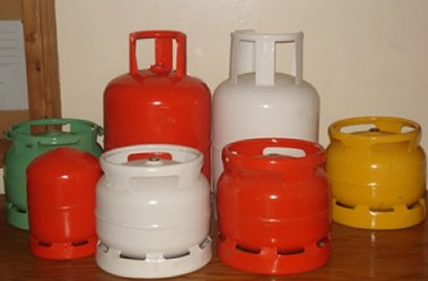
The recent increase in the price of cooking gas has further worsened the economic hardship facing millions of Nigerians, with many households now struggling to afford basic domestic energy needs amid rising inflation and worsening living conditions.
Over the weekend, the price of Liquefied Petroleum Gas (LPG), popularly known as cooking gas, reportedly rose from about N1,200 per kilogramme to between N1,400 and N1,500 in several parts of the country. The increase has pushed the cost of refilling a 12.5kg cylinder from about N14,200 to nearly N17,500 in some locations.
A visit to several gas stations in the Amuwo Odofin and Festac areas of Lagos State revealed widespread frustration among residents, many of whom described the latest increase as unbearable.
Some customers who arrived to refill 12.5kg cylinders reportedly settled for smaller quantities due to insufficient funds, while others abandoned purchases entirely and considered returning to the use of charcoal and firewood for cooking.
Residents blamed the worsening economic situation on inflation, fuel subsidy removal, and what they described as the government’s inability to address rising living costs, insecurity, poor electricity supply, bad roads, and high food prices.
Speaking at a gas station in Festac, a resident, John Chukwuebuka, warned that the rising cost of cooking gas could trigger increased dependence on firewood and charcoal, thereby worsening deforestation and environmental degradation.
According to him, many Nigerians may be forced to abandon cleaner energy sources if the current trend continues.
“When people can no longer afford cooking gas, they will naturally resort to firewood and charcoal. That means more trees will be cut down, wildlife habitats will be destroyed, and environmental problems such as erosion and desertification will increase,” he said.
Another resident, identified simply as Morenike, expressed frustration over the country’s economic situation, accusing the government of failing to improve the welfare of citizens.
She lamented the rising prices of essential commodities and worsening insecurity across the country, arguing that many Nigerians are gradually losing hope.
Public affairs analyst, Chief Rowland Adenuga, also described the development as unfortunate, noting that cooking gas was expected to provide relief for Nigerians following the removal of petrol subsidy.
“Instead of stabilising the price of cooking gas to ease the burden on citizens, the price continues to rise beyond the reach of ordinary Nigerians,” he said.
Adenuga called on the Federal Government to urgently intervene and implement policies capable of making cooking gas more affordable.
He further argued that subsidising cooking gas could help reduce deforestation by discouraging the use of firewood and charcoal.
“Making cooking gas affordable is not only an economic issue but also an environmental necessity. If prices continue to rise, more Nigerians will depend on firewood, leading to serious environmental consequences,” he added.
Education rights activist, James Hamilton, attributed the increase largely to inflation and the broader economic crisis affecting the country.
“Inflation is impacting everything in Nigeria, including cooking gas. Nigerians are already struggling with high food prices and transportation costs. Adding another increase in cooking gas will only worsen the hardship,” he said.
Hamilton warned that continued economic pressure on citizens could lead to public unrest if urgent measures are not taken to ease the burden on households.
Meanwhile, Professor Anthony Ugwu of Nnamdi Azikiwe University, Awka, said the increase may also be linked to rising demand for LPG as many Nigerians now use gas-powered generators following the removal of fuel subsidy.
“Cooking gas is no longer used only for cooking. Many households now rely on it to power generators because of expensive petrol and poor electricity supply. Naturally, increased demand will affect prices,” he explained.
He also warned that the continued rise in cooking gas prices could push more Nigerians toward traditional cooking methods that may negatively affect the environment.
Stakeholders and residents have continued to urge the Federal Government to take urgent steps to stabilise the price of cooking gas and address the broader economic challenges confronting citizens.



















Comments